
Your data on MRCVSonline
The nature of the services provided by Vision Media means that we might obtain certain information about you.
Please read our Data Protection and Privacy Policy for details.

In addition, (with your consent) some parts of our website may store a 'cookie' in your browser for the purposes of
functionality or performance monitoring.
Click here to manage your settings.
If you would like to forward this story on to a friend, simply fill in the form below and click send.

Your friend's email:
Your email:
Your name:
 
 
Send Cancel

Birds under threat of extinction from fire ants
Fire ants are the latest threat that could lead to the extinction of the Tahiti monarch

Appeal launched to ensure breeding season

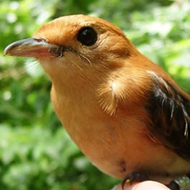
A rare bird, the Tahiti monarch, is under a fresh threat of extinction from fire ants, having already suffered dwindling numbers as a result of rat attacks and heavy rain, Birdlife International has reported.

There are less than 50 mature birds left and just ten breeding pairs remain in the wild.

A conservation award has been won by Manu (Société d'Ornithologie de Polynésie) for its work with the Tahiti monarchs in BirdLife people’s choice award this month.

That led to the best breeding season for the birds in the 16 years since the conservation work began.

The work included measures for controlling rats, and planting trees.

But the monarch also face threats from heavy rains and from fire ants which are capable of eating an adult, chicks and eggs within minutes. These ants have been found on the edge of the Tahiti monarch's valley.

"These conditions are bad for the breeding birds,” warned Caroline Blanvillain from Manu.

“Monarchs need continuous predator control to keep them safe, and if we don’t quickly eradicate the fire ant colonies they will reach the birds and kill them.

“We need to act now, the 10 breeding pairs are struggling to keep their nests safe. On Friday, eight chicks had survived the rain, now every chick needs to be given a chance against the rats and the ants.

"If we can raise enough funds we can make the forest safe for the fledglings.’’

In order to help tackle the threats to the Tahiti Monarch, BirdLife and Manu have launched an urgent appeal for funding.

Image courtesy of BirdLife

Become a member or log in to add this story to your CPD history

Equine Disease Surveillance report released for Q4 2025

News Story 1
 The latest Equine Disease Surveillance report has been released, with details on equine disease from Q4 of 2025.

The report, produced by Equine Infectious Disease Surveillance, includes advice on rule changes for equine influenza vaccination.

Statistics and maps detail recent outbreaks of equine herpes virus, equine influenza, equine strangles and equine grass sickness. A series of laboratory reports provides data on virology, bacteriology, parasitology and toxicosis.

This issue also features a case study of orthoflavivus-associated neurological disease in a horse in the UK. 

Click here for more...
News Shorts
RCVS annual renewal fee for vets due

RCVS' annual renewal fee for veterinary surgeons is now due. Vets must pay their renewal fee before Wednesday, 1 April 2026.

This year's standard annual fee has increased to 431 from last year's 418. This is an approximately three per cent increase, as approved by RCVS Council and the Privy Council.

Tshidi Gardner, RCVS treasurer, said: "The small fee increase will be used to help deliver both our everyday activities and our new ambitious Strategic Plan, which includes aims such as achieving new legislation, reviewing the Codes of Professional Conduct and supporting guidance, and continuing to support the professions through activities such as the Mind Matters Initiative, RCVS Academy and career development."

A full breakdown of the new fees is on the RCVS website. Information about tax relief is available on the UK government website.


