


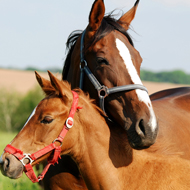
National Equine Forum also discusses welfare and overbreeding
The horse ID system, disease control, and unnecessary breeding were all discussed as more than 200 people came together for the National Equine Forum (NEF).
It was the 22nd year in which the forum has taken place – the event played host to the signing of a Memorandum of Understanding between the Fédération Equestre Internationale (FEI) and World Horse Welfare (WHW), which provides guidelines for welfare in equestrian sport.
It also saw the launch of e.hoof.com, a new online, multi-media educational tool for vets and farriers as well as interested owners and riders.
NEF President HRH The Princess Royal, international equine vets, researchers, riders and trainers as well as equestrian trade business leaders, were among the guests.
Roly Owers, chief executive of WHW led a debate on responsible breeding and horse ownership.
“Our aim must be to reduce the number of horses bred, and improve the quality of horses bred, and so diminish the number of horses in a perilous situation. We all have a responsibility to rise to the challenge,” he said.
Nicolas de Brauwere, head of welfare and behaviour at Redwings Horse Sanctuary said irresponsible owners cause "problem" horses. He said owners need to “address problems rather than move on to another horse.”
Mr de Brauwere also called for owners to be more responsible not only with breeding but also in buying, selling, training, riding and general care of their horses.
Stephen Potter, partner at LJ Potter Partners LLP spoke on the role of the horse meat industry in the UK.
He said media pressure had contributed to the general public’s negative view of euthanasia, and suggested that a review of current drug control legislation, which requires permanent exclusion from the food chain without good scientific reason, could increase the value of unwanted horses, boosting welfare.
Alick Simmons, deputy chief veterinary officer at Defra, reported that the tripartite agreement, coming into force in May, will provide a higher level of protection from the spread of infectious diseases from France to the UK.
Equine diseases EVA and CEM could potentially have their notifiable disease status removed, bringing the UK in line with most other EU member states, said Mr Simmons.
He also called for police, councils and charities to target the perpetrators behind fly grazing although he also acknowledged better powers are needed to identify owners.
Talks with industry bodies to tackle the ragwort problem are underway, Mr Simmons said, while he added that with regard horse passports, a set of minimum operating standards for passport issuing organisations were now in place, designed to make passports more difficult to tamper with.
Jan Rogers, head of equine development, British Equestrian Federation, reiterated the need for a workable equine ID system, when she outlined initial plans for a central equine information system which will help coordinate an industry that is estimated to be worth £7 billion.
“We have learned a great deal from previous databases and there are things we can improve upon. We need to get the system right for all users, from enforcers to passport issuing organisations to horse owners," she said.
HRH The Princess Royal, President of the NEF, closed the day, saying that the forum gives the horse industry a great opportunity to work together.
The full proceedings can be downloaded at www.bef.co.uk on the National Equine Forum page.

 BVA has announced a new series of its Building Great Workplaces lunchtime webinars.



