
Your data on MRCVSonline
The nature of the services provided by Vision Media means that we might obtain certain information about you.
Please read our Data Protection and Privacy Policy for details.

In addition, (with your consent) some parts of our website may store a 'cookie' in your browser for the purposes of
functionality or performance monitoring.
Click here to manage your settings.
If you would like to forward this story on to a friend, simply fill in the form below and click send.

Your friend's email:
Your email:
Your name:
 
 
Send Cancel

RSPB warns of plastic bag dangers
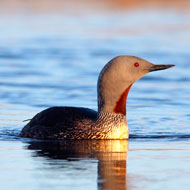
red throated diver
Red-throated divers have seen a recent population decline.
Red-throated diver photographed with a plastic bag in its mouth

RSPB Scotland has urged the public to dispose of litter carefully after a rare bird was photographed with a plastic bag in its beak.

The red-throated diver was caught on camera in a remote part of North Uist on a loch.

James Boyle, site manager of the RSPB's Uist reserves said: “We urge people to take great care in the way they dispose of plastic bags or, indeed, any other rubbish, particularly balloons and Chinese lanterns.

“They pose a direct threat to our wildlife and it is depressing to think that plastic bags are even reaching remote lochans in a place like North Uist.”

Marine birds such as red-throated divers can mistake the bags for fish or use it as nesting material, Mr Boyle added. “If it becomes entangled on their legs or heads it can prove fatal.”

The red-throated diver is so named as it has a distinctive red throat in summer. It is the smaller of two breeding species of diver in the UK and has seen a recent population decline, putting it on the RSPB's Amber List of species.

Scottish Parliament recently approved new rules aiming to cut the use of single-use carrier bags by 80 per cent – a move welcomed by the RSPB. From October this year, all retailers will have to apply a compulsory 5p charge for single-use carrier bags.


Become a member or log in to add this story to your CPD history

Equine Disease Surveillance report released for Q4 2025

News Story 1
 The latest Equine Disease Surveillance report has been released, with details on equine disease from Q4 of 2025.

The report, produced by Equine Infectious Disease Surveillance, includes advice on rule changes for equine influenza vaccination.

Statistics and maps detail recent outbreaks of equine herpes virus, equine influenza, equine strangles and equine grass sickness. A series of laboratory reports provides data on virology, bacteriology, parasitology and toxicosis.

This issue also features a case study of orthoflavivus-associated neurological disease in a horse in the UK. 

Click here for more...
News Shorts
RCVS annual renewal fee for vets due

RCVS' annual renewal fee for veterinary surgeons is now due. Vets must pay their renewal fee before Wednesday, 1 April 2026.

This year's standard annual fee has increased to 431 from last year's 418. This is an approximately three per cent increase, as approved by RCVS Council and the Privy Council.

Tshidi Gardner, RCVS treasurer, said: "The small fee increase will be used to help deliver both our everyday activities and our new ambitious Strategic Plan, which includes aims such as achieving new legislation, reviewing the Codes of Professional Conduct and supporting guidance, and continuing to support the professions through activities such as the Mind Matters Initiative, RCVS Academy and career development."

A full breakdown of the new fees is on the RCVS website. Information about tax relief is available on the UK government website.

