


Vet nurses told not to be afraid of bats
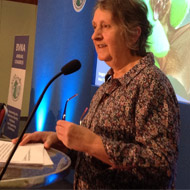
Maggie Brown
Speaking at the BVNA Congress in Telford on its second day, bat expert Maggie Brown reassured vet nurses that despite wildlife and welfare legislation, there is no legal restriction on vet practices caring for bats in the short term.
Health and safety concerns should be taken seriously, however, and sensible precautions taken. The risk is from bites and so the wearing of two layers of latex gloves should be routine when handling bats. If you are likely to handle them on a regular basis, then rabies vaccination may be a good idea.
Any bat found in daylight hours is likely to be compromised. Most commonly, Pipistrelle bats are presented and they are great escapologists. And 'dead' bats may simply be in daily torpor, so leave them alone until they wake up before examining them. A gentle approach to handling is essential.
A clear-sided plastic container is best for temporarily housing the bat and include a tea towel trapped in the lid so that the bat can cling and roost. It is useful to provide a protected heat source.
Provide water or rehydration fluid as a first measure. Food can then be provided, preferably as specially 'beheaded' live mealworms or prescription recovery or puppy-rearing pastes. This is a time-consuming exercise and requires great patience.
Fractures should be assessed on a case-by-case basis with future viability in mind; and cat bite wounds will invariably require antibiotic therapy. Dehydration is a common finding.
Infectious diseases of concern are white nose virus and lyssa viruses, especially EBLV2 in Daubenton's bats.
It is important to contact local bat carers for advice and help in restoring bats to the wild and the following are useful starting points for guidelines and information:
The Bat Conservation Trust website at www.bats.org.uk
National Bat Helpline on 0845 1300 228 or enquiries@bats.org.uk
Maggie Brown on 01943 466101


 Defra has published guidance for the vet sector ahead of a proposed UK-EU Sanitary and Phytosanitary agreement.



