


CLA welcomes MPs' support for fly-grazing Bill
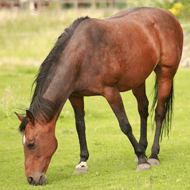
A recent CLA report revealed that more than 3,000 horses are being fly-grazed in England.
The Country Land and Business Association (CLA), which represents farmers, rural businesses and landowners, has said that it is "pleased and encouraged" MP Julian Sturdy's Private Members Bill on horse fly-grazing has passed its second reading in parliament.
The Control of Horses Bill would see the time it takes to rescue horses abandoned to fly-grazing reduced from two weeks to four days, with new powers created to allow horses to be sent to animal welfare sanctuaries.
Henry Robinson, CLA's President, said: "We're pleased and encouraged the MPs have rightly backed Julian Sturdy's Private Members Bill. CLA policy and evidence have been instrumental in moving it on to the Committee Stage, which is another step towards ensuring the law in England adequately protects both landowners and the welfare of the animals.
"Wales has already taken steps to provide such powers in the form of the Control of Horses (Wales) Act 2014, which allows local authorities to take swift and decisive action. The CLA would like to see similar powers in England, together with more effective legislation to enable landowners n both England and Wales to deal with the problem in a quicker and more cost effective manner.
"The CLA has been calling on the government to ensure Local Authorities and landowners in both nations would have the power they need to tackle fly-grazing - without collective approach the problem will simply migrate from one country or area to the next."
In September, together with a number of animal welfare charities and rural organisations, the CLA launched a report called 'Stop the scourge - time to address unlawful fly-grazing in England'. The report revealed that more than 3,000 horses are being fly-grazed in England, causing misery for horses, animal welfare organisations, landowners and Local Authorities.
Henry Robinson subsequently met with Lord de Mauley from Defra on the issue and gave oral evidence to the Environment, Food and Rural Affairs Committee inquiry into the causes and impacts of fly-grazing.


 BVA has announced a new series of its Building Great Workplaces lunchtime webinars.



