


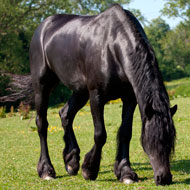
Be vigilant for clinical signs of atypical myopathy, vets warned
Vets are urged to be vigilant for clinical signs of atypical myopathy after a surge in UK cases. The British Equine Veterinary Association (BEVA) has warned that the number of cases could continue to rise this winter.
Rossdale's Equine Hospital in Newmarket said it saw more than five times as many atypical myopathy cases last month compared to the same time last year. It is thought this dramatic incline is being seen across the UK. In response, two free online articles have been made available to help vets address the threat.
Research published in the Equine Veterinary Journal (EVJ) last year reported a link between this highly fatal muscle disease and hypoglycin-A, a toxin found in the seeds of sycamore trees (Acer pseudoplatanus).
High winds this autumn have led to considerable contamination of pastures with sycamore seeds. Although these seeds are not particularly palatable, horses with poor quality pasture to graze on may be tempted to ingest a considerable number. Further cases of atypical myopathy are possible this winter as access to grass becomes more limited.
"It is imperative to spot the symptoms of AM and commence treatment promptly, preferably with hospitalisation of the affected animal to give it any chance of survival," said Professor Celia Marr, partner at Rossdales, European Specialist in Equine Internal Medicine and editor of the EVJ.
Clinical signs to be aware of include muscle weakness or stiffness, colic-like symptoms, laboured breathing, dark red-brown urine, recumbency or even sudden death.
Horses most likely to develop atypical myopathy are those kept in sparse pastures with trees in and around the area and accumulated dead leaves and wood. Affected horses are often not fed supplementary hay or feed.
The toxin affects the aerobic energy metabolism, therefore treatment should promote glucose metabolism and provide fluid dieresis.
In order to reduce the risk of atypical myopathy, owners are advised to provide supplementary feed, avoid leaving wet hay on the ground to rot, fence off affected areas, remove seeds where possible, limit grass turnout and consider that even fields without sycamore trees can contain seeds spread by flood water or high winds.
The free articles can be found by visiting the EVJ website:
Volume 25, Issue 5, pages 264-270, May 2013
Management of cases suffering from atypical myopathy: Interpretations of descriptive, epidemiological and pathophysiological findings. Part 1: First aid, cardiovascular, nutritional and digestive care
Volume 25, Issue 6, pages 308-314, June 2013
Management of cases suffering from atypical myopathy: Interpretations of descriptive, epidemiological and pathophysiological findings. Part 2: Muscular, urinary, respiratory and hepatic care, and inflammatory/infectious status


 BVA has announced a new series of its Building Great Workplaces lunchtime webinars.



