


Setting the A-gender
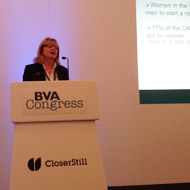
Professor Colette Henry
Women have different perceptions of entrepreneurship to men that reflect, amongst other things, a fear of failure, a different approach to opportunities and the concept of 'self-efficacy'. They often run smaller businesses, are more risk aware, and have different approaches to networking – plus there are always the family responsibilities.
These were the opening remarks of Professor Colette Henry, editor of the International Journal of Gender & Entrepreneurship, speaking at the BVA Congress. She said the gender shift has been one of the most significant features of the veterinary profession during the past decade, yet we do not know what the outcome will be. It is now a predominantly female profession, but there are still fewer women at principal/director level than men.
Professor Henry posed several questions. If the general case is that fewer women put themselves forward and this applies to the veterinary profession, what will it mean in the future? Will fewer private practices be established? Will there be more corporate practices? Lower salary levels as the norm? Fewer men?
On the other hand, will it mean more effective leadership of the veterinary profession that is more conducive to take on board family requirements and an improvement in work/life balance? Certainly in other professions, companies with women on their boards are more successful.
"This will not happen if we do nothing," she said, addressing the women in the audience. "If you grab the initiative, there are huge opportunities."
"Maybe vet schools can provide education about entrepreneurship? Perhaps private practices can use the opportunity to shape the profession to suit a 'feminized' sector and the corporate sector offer less risky business leadership opportunities for women?"
Jacqui Molyneux, past president of the RCVS, presented statistics that endorsed the points made by Professor Henry. Referring to the SPVS Salary Survey, she homed in on the significant difference in salaries between male and female members of the profession – between 17 and 20 per cent – and suggested that the reasons for this were difficult to define but the situation was indefensible.
One conundrum she emphasised is the fact that female vets do not seem respond to general appeals for their greater involvement in the profession, yet they will often respond to direct face-to-face approaches. "Female vets need to plan their career in the direction that they wish it to go ... and to have patience whilst they pursue it," she concluded.


 BVA has announced a new series of its Building Great Workplaces lunchtime webinars.



