
Your data on MRCVSonline
The nature of the services provided by Vision Media means that we might obtain certain information about you.
Please read our Data Protection and Privacy Policy for details.

In addition, (with your consent) some parts of our website may store a 'cookie' in your browser for the purposes of
functionality or performance monitoring.
Click here to manage your settings.
If you would like to forward this story on to a friend, simply fill in the form below and click send.

Your friend's email:
Your email:
Your name:
 
 
Send Cancel

Soya alternative may help farmers save money
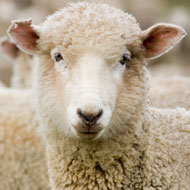
sheep
The diet based on wheat distillers dark grains was the cheapest.
Project finds other ewe feeds can be used without affecting performance

An alternative ewe feed could save farmers money without affecting animal performance, according to findings from a new research project.

Soya is generally used to boost protein in ewes in the late stages of pregnancy and lactation, but this can be costly for the producer.

A project funded by EBLEX compared alternative protein sources to soya bean meal for pregnant ewes on a total mixed ration system (TMR) based on grass silage.

During the last three weeks of pregnancy, protein is particularly important for udder development and milk production in ewes.

Protein is derived from rumen degradable protein (RDP) and digestible undegradable protein (DUP). RDP is required daily and can be found in grass, hay, silage and green leafy brassicas. Usually, RDP is sufficient to meet the ewe's protein needs, but in late pregnancy soya is used to boost protein levels in the diet.

HCC, ADAS and Reaseheath College compared six diets with similar crude protein levels, which were fed to six groups of 40 twin-bearing ewes for four weeks prior to lambing in 2014. Researchers collected ewe body condition scores, ewe weights and lamb weights.

According to the findings, there were no significant differences in animal performance between the diets. The soya diet was the most expensive, whereas the diet based on wheat distillers dark grains was the cheapest.

EBLEX says that while not all producers have access to TMR facilities, some could mix their own diets. If changes are made to diets, the company advises that help from a nutritionist is crucial. Forage analysis should also be carried out so feeds can be used to complement it.

For more information about the research findings, visit: http://www.eblex.org.uk/research/climate-change/climate-change-sheep/protein-sources-and-tmr-feeding/


 

Become a member or log in to add this story to your CPD history

Equine Disease Surveillance report released for Q4 2025

News Story 1
 The latest Equine Disease Surveillance report has been released, with details on equine disease from Q4 of 2025.

The report, produced by Equine Infectious Disease Surveillance, includes advice on rule changes for equine influenza vaccination.

Statistics and maps detail recent outbreaks of equine herpes virus, equine influenza, equine strangles and equine grass sickness. A series of laboratory reports provides data on virology, bacteriology, parasitology and toxicosis.

This issue also features a case study of orthoflavivus-associated neurological disease in a horse in the UK. 

Click here for more...
News Shorts
NSA webinar explores sheep tailing and castration

The National Sheep Association (NSA) is to host a free webinar on the castration and tail docking of lambs.

The webinar, 'Understanding the tailing and castration consultation: A guide for sheep farmers', will be hosted online on Monday, 2 March 2026 at 7.30pm.

It comes during a government consultation into the methods used for these procedures. Farmers are encouraged to engage before the consultation period closes on Monday, 9 March 2026.

The webinar offers clear and actionable guidance to support farmers to contribute meaningfully to the consultation and prepare for potential changes.

On the panel will be former SVS president Kate Hovers, farmer and vet Ann Van Eetvelt and SRUC professor in Animal Health and Veterinary Sciences Cathy Dwyer. Each panel member will utilise their own specialism and expertise to evaluate risks and outcomes to sheep farming.

Find out more about the webinar on the NSA website.

