


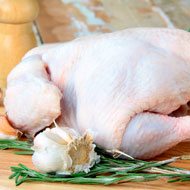
Seventy-three per cent of supermarket chickens contaminated with campylobacter
Over 70 per cent of supermarket chickens are contaminated with campylobacter, according to the latest figures published by the Food Standards Agency (FSA).
Cumulative results from over 3,000 samples of fresh chickens, tested between February and November 2014, reveal that 73 per cent of supermarket chickens are contaminated with campylobacter - one of the biggest causes of food poisoning in the UK.
Furthermore, 19 per cent of chickens tested positive within the highest band of contamination (more than 1,000 colony forming units per gram), and seven per cent of packaging tested positive for the bacteria.
The FSA are now calling on the industry to play its part in reducing campylobacter contamination at each production stage to as low a level as possible before raw chicken reaches the consumer.
The FSA's 12 month campylobacter survey, running from February 2014 to February 2015, will test around 4,000 chicken samples for the bacteria.
The organisation has praised the publication of a case study by Marks and Spencer, who recently implemented a five-point plan to reduce campylobacter in its chickens. The case study illustrated a significant reduction in the number of the most highly contaminated birds.
FSA director of policy Steve Wearne said: "We now know it is possible to make positive inroads in the reduction of campylobacter. Figures released today by M&S show that their intervention plan has resulted in fewer contaminated chickens on sale in their stores. If one retailer can achieve this campylobacter reduction through systematic interventions then others can, and should.
"Our survey is putting pressure on retailers to work with poultry processors to do more to tackle campylobacter. We want the industry to reduce the number of the most highly contaminated chickens as we know this will have the greatest impact on public health.
"Campylobacter is killed by thorough cooking, but it should not be left to consumers to manage the risk. It is the most common form of food poisoning in the UK, affecting an estimated 280,000 people a year. Poultry is the source of the majority of these cases, so the industry should be making every effort to ensure chickens are as free from campylobacter as possible before they reach customers.
Ricard McDonald, who is chair of Acting on Campylobacter Together (ACT) added: "The UK is leading the way in the search for solutions to reduce campylobacter levels. We have learned a lot over the last five years about which interventions have the potential to make chicken safer. We must continue to work together to apply these successfully and help industry deliver the results we all want to see."
"The ACT Board is central to this work and represents a forum where processors and retailers can come together to discuss their work to tackle campylobacter and results from the latest interventions. This collaborative approach will be essential as the focus shifts to application and delivery.
"Although the impact of industry interventions has not been seen in the results from the FSA survey to date, we look forward to seeing progress in the FSA’s follow up survey."
To view the full report visit www.food.gov.uk. A full set of results is expected to be published in May.


 BVA has announced a new series of its Building Great Workplaces lunchtime webinars.



