Your data on MRCVSonline
The nature of the services provided by Vision Media means that we might obtain certain information about you.
Please read our Data Protection and Privacy Policy for details.

In addition, (with your consent) some parts of our website may store a 'cookie' in your browser for the purposes of
functionality or performance monitoring.
Click here to manage your settings.
If you would like to forward this story on to a friend, simply fill in the form below and click send.

Your friend's email:
Your email:
Your name:
 
 
Send Cancel

Mercury poses a rising threat to Arctic birds
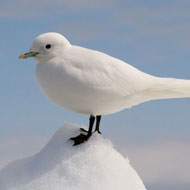
ivory gull
Concentrations of mercury in ivory gull feathers increased nearly 50-fold in 130 years.

Contaminant may be the cause of ivory gull declines

Rising exposure to mercury could be the cause of rapid declines in Arctic bird populations, particularly ivory gulls, according to new research.

Ivory gull populations have fallen by more than 80 per cent in Canada since the 1980s, leaving just 400-500 breeding pairs. However, the reasons for this are not well understood.

Biologists from Canada's University of Saskatchewan aimed to find out whether contaminants are to blame by analysing the burden of methyl mercury in feathers over the past 130 years.

Using feathers from museum specimens spanning 1877-2007, researchers found concentrations of mercury had increased nearly 50-fold, despite no evidence of dietary change during this period.

Writing in the Proceedings of the Royal Society of London B- Biological Sciences, the authors say: "Methyl mercury (MeHG) in ivory gull feathers increased significantly over the past 130 years, despite the lack of evidence of a shift in diet.

"We attribute this increase to increases in the amount of mercury (HG) in the environment that has been observed post-industrially and attributed to human activity."

With oceanic mercury expected to rise four-fold between 2005-2050, the findings have prompted concerns about continued dramatic declines in ivory gull  populations, as well as other high-latitude species.

For the full report, visit: http://rspb.royalsocietypublishing.org/content/282/1805/20150032

Image © jomilo75/Wikimedia Commons/CC BY 2.0

Become a member or log in to add this story to your CPD history

Equine Disease Surveillance report released for Q4 2025

News Story 1
 The latest Equine Disease Surveillance report has been released, with details on equine disease from Q4 of 2025.

The report, produced by Equine Infectious Disease Surveillance, includes advice on rule changes for equine influenza vaccination.

Statistics and maps detail recent outbreaks of equine herpes virus, equine influenza, equine strangles and equine grass sickness. A series of laboratory reports provides data on virology, bacteriology, parasitology and toxicosis.

This issue also features a case study of orthoflavivus-associated neurological disease in a horse in the UK. 

Click here for more...
News Shorts
RCVS annual renewal fee for vets due

RCVS' annual renewal fee for veterinary surgeons is now due. Vets must pay their renewal fee before Wednesday, 1 April 2026.

This year's standard annual fee has increased to 431 from last year's 418. This is an approximately three per cent increase, as approved by RCVS Council and the Privy Council.

Tshidi Gardner, RCVS treasurer, said: "The small fee increase will be used to help deliver both our everyday activities and our new ambitious Strategic Plan, which includes aims such as achieving new legislation, reviewing the Codes of Professional Conduct and supporting guidance, and continuing to support the professions through activities such as the Mind Matters Initiative, RCVS Academy and career development."

A full breakdown of the new fees is on the RCVS website. Information about tax relief is available on the UK government website.