
Your data on MRCVSonline
The nature of the services provided by Vision Media means that we might obtain certain information about you.
Please read our Data Protection and Privacy Policy for details.

In addition, (with your consent) some parts of our website may store a 'cookie' in your browser for the purposes of
functionality or performance monitoring.
Click here to manage your settings.
If you would like to forward this story on to a friend, simply fill in the form below and click send.

Your friend's email:
Your email:
Your name:
 
 
Send Cancel

Novel blood test for sheep scab
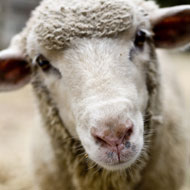
sheep
"By using this new test it is now possible to detect the infection much earlier, at the sub-clinical stage." 
New diagnostic tool now in use by APHA

A novel diagnostic blood test developed for sheep scab infestation is now being carried out by the APHA. Scientists say the test will allow infections to be detected much earlier.

Sheep scab is one of the UK's most significant parasitic sheep diseases, and is a notifiable disease in Scotland.

During the early stages of sheep scab, animals are often asymptomatic. This phase can last several weeks, during which time affected animals can act as a source of infection for other sheep.

Moredun Research Institute, who developed the test, say it is now possible to identify sub-clinical cases, which is essential if control and eradication programmes are to be successful.

Dr Stewart Burgess, who leads the institute's sheep scab research group, said: "The development of a sensitive and specific blood test provides an important tool to aid control strategies for sheep scab and crucially, by using this new test it is now possible to detect the infection much earlier, at the sub-clinical stage." 

The test is initially being offered free of charge by the APHA. It works by detecting host antibodies to a specific protein that is only found in the sheep scab mite, Psoroptes ovis.

It is hoped the new blood test will offer a more powerful and reliable diagnosis for sheep scab, when used in conjunction with existing ectoparasitic examinations of skin scrapings currently offered by the APHA.

To make use of this new diagnostic service, veterinary surgeons are asked to submit clotted blood samples and skin scraping samples from the same sheep to APHA's Shrewsbury centre. The vet will then receive the results from the APHA.

 

Become a member or log in to add this story to your CPD history

Equine Disease Surveillance report released for Q4 2025

News Story 1
 The latest Equine Disease Surveillance report has been released, with details on equine disease from Q4 of 2025.

The report, produced by Equine Infectious Disease Surveillance, includes advice on rule changes for equine influenza vaccination.

Statistics and maps detail recent outbreaks of equine herpes virus, equine influenza, equine strangles and equine grass sickness. A series of laboratory reports provides data on virology, bacteriology, parasitology and toxicosis.

This issue also features a case study of orthoflavivus-associated neurological disease in a horse in the UK. 

Click here for more...
News Shorts
NSA webinar explores sheep tailing and castration

The National Sheep Association (NSA) is to host a free webinar on the castration and tail docking of lambs.

The webinar, 'Understanding the tailing and castration consultation: A guide for sheep farmers', will be hosted online on Monday, 2 March 2026 at 7.30pm.

It comes during a government consultation into the methods used for these procedures. Farmers are encouraged to engage before the consultation period closes on Monday, 9 March 2026.

The webinar offers clear and actionable guidance to support farmers to contribute meaningfully to the consultation and prepare for potential changes.

On the panel will be former SVS president Kate Hovers, farmer and vet Ann Van Eetvelt and SRUC professor in Animal Health and Veterinary Sciences Cathy Dwyer. Each panel member will utilise their own specialism and expertise to evaluate risks and outcomes to sheep farming.

Find out more about the webinar on the NSA website.

