


Captive breeding 'not the solution'
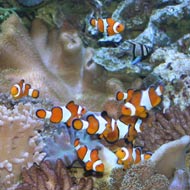
Capture and pre-sale mortality rates are said to be 80-98 per cent in 'aquarium' fish.
Biologist Clifford Warwick has criticised those who promote the captive breeding of exotic pets as a good alternative to the sale of wild-caught animals.
Writing in The Ecologist, he said that for the individual animal "the abuses inherent to being captive-bred are as bad as they are to being wild-caught".
He believes an outright ban on keeping wild animals as pets, or a 'positive list' system (where species are verified as 'safe' to sell or keep), is the only way to address the welfare and conservation issues.
The issues with wild-caught animals being supplied to the pet trade are well-known - animals are transported across the globe in crowded, unsanitary conditions, facing shockingly high mortality rates.
In 'aquarium' fish, the capture and pre-sale death rates are said to be 80-98 per cent. The 'industry standard' mortality rate for amphibians, reptiles and mammals is 70 per cent in their first six weeks at wholesalers.
The trade also has implications for wild populations, Mr Warwick argues. The rising demand for clown fish after the release of popular film Finding Nemo, resulted in a 75 per cent decline in the species.
However, Mr Warwick points to the unsuitable environments in which captive bred animals are often kept.
He also questions the conservation benefits of captive breeding, writing: "If welfare is set aside, not that it should be, but if it is, then does the evidence demonstrate unequivocal conservation and ecological benefits from artificially raising animals? From over 30 years as a wildlife trade investigator I can confidently state that it does not."
While researching his article for The Ecologist, he claims he could find no examples of captive breeding endeavours that met a list of criteria and were associated with successful conservation or reintroduction of species.
For the full article, visit: http://www.theecologist.org/News/news_analysis/2985202/captive_breeding_saving_wildlife_or_saving_the_pet_trade.html


 Defra has published guidance for the vet sector ahead of a proposed UK-EU Sanitary and Phytosanitary agreement.



