


Language requirement approved for code of conduct
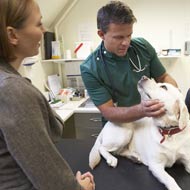
Around 1.8 per cent of RVNs on the register trained outside of the UK.
The VN Council has approved changes to the Code of Professional Conduct, requiring veterinary nurses to communicate effectively in written and spoken English.
This is in line with equivalent proposals for the veterinary surgeons' code of conduct.
Previously the code has required veterinary surgeons and nurses to be able to communicate effectively with clients, but there has been no specific mention of English language abilities.
At the most recent VN Council meeting, which took place in Telford, members approved plans to change clause 2.4 of the code to: 'Veterinary nurses must communicate effectively, including in written and spoken English, with clients and ensure informed consent is obtained before treatments or procedures are carried out.'
A new clause (4.5) was also approved: 'Veterinary nurses must communicate effectively, including in written and spoken English, with the veterinary team and other veterinary professionals in the UK.'
These amends are supplemented by new supporting guidance on communication.
Defra is currently consulting on a change to the Veterinary Surgeons' Act, which would allow the RCVS to impose an English language test where there are 'serious and concrete doubts' about the language abilities of an EU applicant to the register of veterinary surgeons.
It is expected that English language tests for veterinary nurses would be introduced at the same time as those for veterinary surgeons.
Around 1.8 per cent of RVNs on the register trained outside of the UK, according to the latest figures. This figure is said to be on the rise, however.
Meanwhile, around half of all veterinary surgeons who register with the RCVS each year are from overseas - mostly EU or EEA countries.
Yet prior to 2014, the RCVS was not able to language test EU vets and nurses as a result of the way EU legislation had been implemented in the UK.
A revised directive which came into force in January 2014, however, allows the Veterinary Surgeons Act to be amended. This does not allow the RCVS to carry out blanket language testing of all EU applicants to the register, but it does mean applicants or those already on the register can be tested if there are serious concerns about their knowledge of the English language.


 Defra has published guidance for the vet sector ahead of a proposed UK-EU Sanitary and Phytosanitary agreement.



