


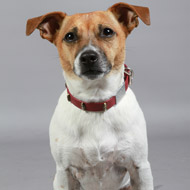
Births to be recorded from next year
The Kennel Club has officially recognised the Jack Russell Terrier as a pedigree breed, bringing the number of recognised pedigree dogs in the UK to 216.
A common sight in Britain's streets and parks, the Jack Russell Terrier is a favourite breed of celebrities Sarah Jessica Parker and Maria Carey, and has even appeared in film.
However, despite its obvious popularity, the Jack Russell Terrier has never been recognised as a breed. Instead it has been classed as a 'type' due to the wide array of dogs that can be described as Jack Russell Terriers.
To protect the heritage of this popular dog, the Kennel Club will begin recording Jack Russell births through its voluntary registration system from next year. It will also draft a Breed Standard, which describes the various characteristics of a breed and how they are likely to be in terms of their size, exercise, temperament and grooming needs.
It is hoped this will promote the responsible breeding of Jack Russells and ensure that the level of predictability seen in other recognised dog breeds is duplicated in registered Jack Russell Terriers.
Caroline Kisko, Kennel Club Secretary, explains: “Many people think that the Jack Russell Terrier is already a recognised breed, because they have seen one in their local park or doing the school run with parents, but there are so many varieties of Jack Russell that until now it has not been officially recognised by the Kennel Club.
“By recognising the Jack Russell as an official breed, we can help cement its heritage and protect its future as a much-loved traditional working dog and popular pet. By encouraging the bulk of the population of these dogs to fit a Breed Standard we can help to ensure that puppy buyers get a dog with predictable characteristics that is suitable for their lifestyle and that they are bred to be healthy, with good temperament and are fit for function."
The Jack Russell Terrier will be the 27th breed in the Terrier group of pedigree dogs, joining the West Highland Terrier and the Staffordshire Bull Terrier. The breed is native to the UK, originating from the fox terrier type dogs bred by Parson John Russell in Devon after he acquired his first terrier between 1815 and 1819.
Image (C) Nick Ridley/Kennel Club


 BVA has announced a new series of its Building Great Workplaces lunchtime webinars.



