
Your data on MRCVSonline
The nature of the services provided by Vision Media means that we might obtain certain information about you.
Please read our Data Protection and Privacy Policy for details.

In addition, (with your consent) some parts of our website may store a 'cookie' in your browser for the purposes of
functionality or performance monitoring.
Click here to manage your settings.
If you would like to forward this story on to a friend, simply fill in the form below and click send.

Your friend's email:
Your email:
Your name:
 
 
Send Cancel

New plan to save hen harriers
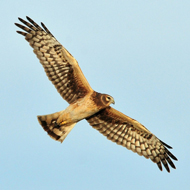
hen harrier
"This new plan will transform the fate of one of our most magnificent birds."
Action plan will 'transform the fate' of the species
 
Defra has published a six-point action plan to save England's iconic hen harrier, which has suffered population declines in recent years.

As well as being a much loved feature of our skies, these birds of prey also make an important contribution to our ecosystem.

The Hen Harrier Action Plan will, for the first time, coordinate the efforts of conservation groups, landowners and wildlife crime officers. Groups will also be encouraged to share best practice to help preserve these birds.

Natural England will lead the plan, working alongside other organisations to:
  • Use satellite tagging and tracking to monitor hen harrier numbers in the UK
  • Encourage land managers and gamekeepers to provide food for birds of prey
  • Analyse intelligence on persecution and deliver better enforcement and deterrents, working alongside the Raptor Persecution Priority Delivery Group
  • Monitor and protect nests and winter roosts
  • Reintroduce hen harriers to suitable parts of south England
  • Consider the feasibility of brood management trials

Some of the above actions, such as monitoring and sharing best practice, are already underway at known nesting sites. Thanks to these measures, nest figures rose from four to six between 2014 and 2015.

Commenting on the plan, environment minister Rory Stewart promised: "This new plan will transform the fate of one of our most magnificent birds.

"We are working closely with conservation organisations and landowners and with their help, this plan will help hen harriers flourish once more while coexisting with a thriving rural economy."


 

Become a member or log in to add this story to your CPD history

Equine Disease Surveillance report released for Q4 2025

News Story 1
 The latest Equine Disease Surveillance report has been released, with details on equine disease from Q4 of 2025.

The report, produced by Equine Infectious Disease Surveillance, includes advice on rule changes for equine influenza vaccination.

Statistics and maps detail recent outbreaks of equine herpes virus, equine influenza, equine strangles and equine grass sickness. A series of laboratory reports provides data on virology, bacteriology, parasitology and toxicosis.

This issue also features a case study of orthoflavivus-associated neurological disease in a horse in the UK. 

Click here for more...
News Shorts
RCVS annual renewal fee for vets due

RCVS' annual renewal fee for veterinary surgeons is now due. Vets must pay their renewal fee before Wednesday, 1 April 2026.

This year's standard annual fee has increased to 431 from last year's 418. This is an approximately three per cent increase, as approved by RCVS Council and the Privy Council.

Tshidi Gardner, RCVS treasurer, said: "The small fee increase will be used to help deliver both our everyday activities and our new ambitious Strategic Plan, which includes aims such as achieving new legislation, reviewing the Codes of Professional Conduct and supporting guidance, and continuing to support the professions through activities such as the Mind Matters Initiative, RCVS Academy and career development."

A full breakdown of the new fees is on the RCVS website. Information about tax relief is available on the UK government website.

