
Your data on MRCVSonline
The nature of the services provided by Vision Media means that we might obtain certain information about you.
Please read our Data Protection and Privacy Policy for details.

In addition, (with your consent) some parts of our website may store a 'cookie' in your browser for the purposes of
functionality or performance monitoring.
Click here to manage your settings.
If you would like to forward this story on to a friend, simply fill in the form below and click send.

Your friend's email:
Your email:
Your name:
 
 
Send Cancel

What the microchipping law means for nurses
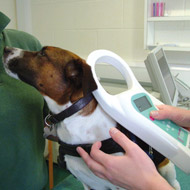
microchip
New microchipping rules are coming into force on 6 April, 2016.
BVNA issues statement clarifying the nurse's role

On 6 April, 2016, dog microchipping will become compulsory in England, Scotland and Wales. In advance of the new law, some changes have already been made to the rules on implanting. To help ensure nurses are up-to-speed, BVNA has issued a statement.

New government regulations came into force on 24 February, 2015. They state that no person may implant a microchip in a dog unless:
  • They are a veterinary surgeon, or, a veterinary nurse acting under the direction of a veterinary surgeon
  • They are a vet student or vet nursing student acting under the direction of a veterinary surgeon
  • They have successfully completed a training course approved by the secretary of state
  • They received training on implantation (including practical experience of implanting a microchip) prior to the date on which these regulations came into force
Should RVNs wish to microchip dogs independently (as a side business or for a voluntary organisation, for example), they must first be satisfactorily assessed on an approved training course, such as that provided by LANTRA or Vetskill.

The current veterinary nursing qualification and occupational standards do not go into the same depth of knowledge and understanding as the new qualification, therefore VN training alone is not considered sufficient under the new rules.

BVNA reminds RVNs that in order to be deemed competent by the RCVS code of conduct, they must be able to provide evidence of the microchip training they have attended, or they should update their skills.

It also stresses that RVNs are regulated and accountable professionals; any individual who does not feel competent should not undertake microchipping without further training.

For more information from the BVNA, visit: http://www.bvna.org.uk/advice/bvna-position-statements


Become a member or log in to add this story to your CPD history

Submissions open for BSAVA Clinical Research Abstracts 2026

News Story 1
 The BSAVA has opened submissions for the BSAVA Clinical Research Abstracts 2026.

It is an opportunity for applicants to present new research on any veterinary subject, such as the preliminary results of a study, discussion of a new technique or a description of an interesting case.

They must be based on high-quality clinical research conducted in industry, practice or academia, and summarised in 250 words.

Applications are welcome from vets, vet nurses, practice managers, and students.

Submissions are open until 6 March 2026. 

Click here for more...
News Shorts
Survey seeks ruminant sector views on antimicrobial stewardship

A new survey is seeking views of people working in the UK ruminant sector on how to tackle the challenge of demonstrating responsible antibiotic stewardship.

Forming part of a wider, collaborative initiative, the results will help identify the types of data available so that challenges with data collection can be better understood and addressed.

Anyone working in the UK farming sector, including vets and farmers,is encouraged to complete the survey, which is available at app.onlinesurveys.jisc.ac.uk

