
Your data on MRCVSonline
The nature of the services provided by Vision Media means that we might obtain certain information about you.
Please read our Data Protection and Privacy Policy for details.

In addition, (with your consent) some parts of our website may store a 'cookie' in your browser for the purposes of
functionality or performance monitoring.
Click here to manage your settings.
If you would like to forward this story on to a friend, simply fill in the form below and click send.

Your friend's email:
Your email:
Your name:
 
 
Send Cancel

Guide to assess equine fitness for transport
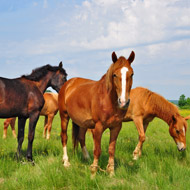
Horses in field
The guidelines are directed at anyone involved in transporting horses, ponies, and donkeys.

Aims to support good animal welfare

New guidelines to assess the fitness of equines for transport have been published following extensive research and consultation.

Coordinated by World Horse Welfare and the Federation of European Equine Veterinary Associations, the guidelines are directed at anyone involved in transporting horses, ponies, and donkeys.

The publication has been developed by experts in the fields of animal transport, welfare, veterinary medicine, industry, research and enforcement.

It aims to support good animal welfare, reduce public health risks, and develop a consistent approach across the European Union.

Furthermore, the guidelines help transporters avoid penalties, financial losses and withdrawal of authorisation or driver’s certificate of competence.

Welcoming the guidelines, Andrea Gavinelli, head of animal welfare at the European Commission, said: “EU Regulation 1/2005 states that “No animal shall be transported unless it is fit for the intended journey”. With this provision the legislator recognised the very important risk to welfare deriving from the transport of unfit animals.

“As in many cases, proper enforcement of the legislation depends upon it being understood. This is why these guidelines play an important role in assisting everyone involved in the transport of horses to ensure they are in full compliance with the legislation. Documents such as this are vital tools for maintaining good health and welfare amongst transported animals."



Become a member or log in to add this story to your CPD history

Equine Disease Surveillance report released for Q4 2025

News Story 1
 The latest Equine Disease Surveillance report has been released, with details on equine disease from Q4 of 2025.

The report, produced by Equine Infectious Disease Surveillance, includes advice on rule changes for equine influenza vaccination.

Statistics and maps detail recent outbreaks of equine herpes virus, equine influenza, equine strangles and equine grass sickness. A series of laboratory reports provides data on virology, bacteriology, parasitology and toxicosis.

This issue also features a case study of orthoflavivus-associated neurological disease in a horse in the UK. 

Click here for more...
News Shorts
NSA webinar explores sheep tailing and castration

The National Sheep Association (NSA) is to host a free webinar on the castration and tail docking of lambs.

The webinar, 'Understanding the tailing and castration consultation: A guide for sheep farmers', will be hosted online on Monday, 2 March 2026 at 7.30pm.

It comes during a government consultation into the methods used for these procedures. Farmers are encouraged to engage before the consultation period closes on Monday, 9 March 2026.

The webinar offers clear and actionable guidance to support farmers to contribute meaningfully to the consultation and prepare for potential changes.

On the panel will be former SVS president Kate Hovers, farmer and vet Ann Van Eetvelt and SRUC professor in Animal Health and Veterinary Sciences Cathy Dwyer. Each panel member will utilise their own specialism and expertise to evaluate risks and outcomes to sheep farming.

Find out more about the webinar on the NSA website.

