Your data on MRCVSonline
The nature of the services provided by Vision Media means that we might obtain certain information about you.
Please read our Data Protection and Privacy Policy for details.

In addition, (with your consent) some parts of our website may store a 'cookie' in your browser for the purposes of
functionality or performance monitoring.
Click here to manage your settings.
If you would like to forward this story on to a friend, simply fill in the form below and click send.

Your friend's email:
Your email:
Your name:
 
 
Send Cancel

WHO advise against international control of ketamine
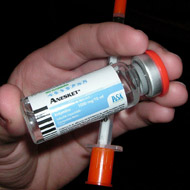
Ketamine
Ketamine is often the only anaesthetic agent available in most developing countries and is also used for pain management.

Committee concludes medical benefits far outweigh potential harm 

Ketamine should not be placed under international control because it does not pose a threat to public health, the World Health Organisation has announced.

It is the fourth time since 2006 that the organisation has made the recommendation and follows a review of the latest evidence by the WHO Expert Committee on Drug Dependence.

The committee concluded that ketamine abuse does not pose a global public health threat, while controlling it could limit access to the only anaesthetic and pain killer available in large areas of the developing world.

“The medical benefits of ketamine far outweigh potential harm from recreational use,” said Marie-Paule Kieny, assistant-director general for health systems and innovation at WHO.

“Controlling ketamine internationally could limit access to essential and emergency surgery, which would constitute a public health crisis in countries where no affordable alternatives exist.”

Used in surgical and diagnostic procedures, ketamine is often the only anaesthetic agent available in most developing countries and is also used for pain management.

Ketamine has a great safety record, but recently it has also been used recreationally, prompting moves to control the substance under international law.

On each of these occasions - in 2006, 2012, 2014 and this year – the WHO Committee has recommended against scheduling. This and other recommendations of the Expert Committee will be conveyed to the Commission on Narcotic Drugs for its final decisions in March 2016.

“We have found that placing substances under international control can often limit access to them for medical purposes,” said Kees De Joncheere, WHO director for essential medicines and health products.

“Morphine is a case in point: even though it is inexpensive and one of the best substances available for pain management, in most countries availability and use are limited due to excessive regulation.”

Image (C) Psychonaught

Become a member or log in to add this story to your CPD history

Vets launch new podcast for pet owners

News Story 1
 Two independent vets have launched a podcast to help owners strengthen their bond with pets. Dr Maggie Roberts and Dr Vanessa Howie, who have worked in both veterinary practice and major charities, are keen to use their experience to enable people to give pets a better life.

The venture, called Vets Talking Pets, provides advice and information on a range of topics, including how to select a suitable pet, where to obtain them and how to get the best out of your vet. Maggie and Vanessa will also discuss sensitive subjects, including end-of-life care, raw food diets and the cost of veterinary care.

The podcast can be found on all the usual podcast sites, including Podbean, Apple, Amazon Music and YouTube. 

Click here for more...
News Shorts
VMD issues guidance on AVM-GSL packaging

The Veterinary Medicines Directorate (VMD) has shared advice on its requirements for medicines considered AVM-GSL.

The guidance explains the information that should be on the outer package, and sets out the typical maximum pack size for an AVM-GSL product. It also describes the user-friendly language, structure and phrases required on packaging and product leaflets.

AVM-GSL products do not require discussion between the purchaser and a veterinary professional. This means that clear product information is needed to support sales choices.

The information will be useful for submitting new products to the AVM-GSL category and lowering the distribution category of products from NFA-VPS to AVM-GSL.

The VMD's guidance can be accessed here.