
Your data on MRCVSonline
The nature of the services provided by Vision Media means that we might obtain certain information about you.
Please read our Data Protection and Privacy Policy for details.

In addition, (with your consent) some parts of our website may store a 'cookie' in your browser for the purposes of
functionality or performance monitoring.
Click here to manage your settings.
If you would like to forward this story on to a friend, simply fill in the form below and click send.

Your friend's email:
Your email:
Your name:
 
 
Send Cancel

Study reveals 'superhero DNA'
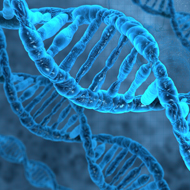
DNA
The findings could be a starting point from which to investigate other changes or anomalies in developing therapies.
Research reveals genetic disease resilience
 
An international team of researchers have studied a database of nearly 600,000 people revealing that 13 were born with ‘superhero DNA’.  

Published in Nature Biotechnology, the approach reveals that 13 healthy people should have developed one of eight severe genetic diseases. The next step is to unravel why.

In a pioneering approach to genetic studies, the focus was directed at the DNA of those who remain healthy, rather than those who became ill. The findings could be a starting point from which to investigate other changes or anomalies in developing therapies.

In an interview with the BBC, Dr Eric Schadt from the Icahn School of Medicine at Mount Sinai Hospital in New York, said: “Most genomic studies focus on finding the cause of a disease, but we see tremendous opportunity in figuring out what keeps people healthy.”

However, progress with the findings has been limited by consent rules signed by the database of DNA sample providers. Despite discovering 13 ‘genetic superheroes’, the scientists are unable to trace them. Pulling into question the ethics behind genetic data sharing, the study is an example of what can be achieved through anonymous genetic and clinical data.

Talking to the BBC, Dr Matthew Hurles, from the Wellcome Trust Sanger Institute, said: “The full benefits of such altruistic data sharing is only fully realised when it becomes possible to go back to the resilient individual to try and understand how their resilience is achieved.”


Become a member or log in to add this story to your CPD history

Defra shares new Sanitary and Phytosanitary guidance

News Story 1
 Defra has published guidance for the vet sector ahead of a proposed UK-EU Sanitary and Phytosanitary agreement.

The agreement, which will change the movement and trade of animals and related products, could see reductions in checks, paperwork and certification. As well as describing regulatory developments, the advice highlights the importance of animal ID, registration and traceability in disease control and other compliance arrangements.

The guidance can be found here. More detail is expected as negotiations progress. 

Click here for more...
News Shorts
BSAVA publishes fifth Manual of Canine and Feline Neurology

The BSAVA has published the fifth edition of its BSAVA Manual of Canine and Feline Neurology.

The new edition has been reviewed and updated, including new developments in diagnostics, therapeutic approaches and clinical decision-making. It is structured to support clinicians through diagnosis, treatment and long-term management.

The guide features five new chapters covering acute myelopathies, chronic myelopathies, emergency protocols, neurotoxicology and neuro-oncology.

It also includes over 100 videos, including demonstrations of neurological examinations, clinical presentations and diagnostic procedures.

Nicola Lloyd, publishing manager, said: "Whether you're a general practitioner seeking practical guidance, or a specialist aiming to refine your expertise, this edition remains an indispensable reference for anyone involved in the care of neurologically compromised dogs and cats."

