Your data on MRCVSonline
The nature of the services provided by Vision Media means that we might obtain certain information about you.
Please read our Data Protection and Privacy Policy for details.

In addition, (with your consent) some parts of our website may store a 'cookie' in your browser for the purposes of
functionality or performance monitoring.
Click here to manage your settings.
If you would like to forward this story on to a friend, simply fill in the form below and click send.

Your friend's email:
Your email:
Your name:
 
 
Send Cancel

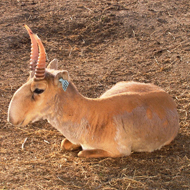
Mystery mass Saiga deaths explained
saiga
Intensive work is underway to understand the triggers and co-factors behind this catastrophic event.

Further work needed to understand triggers 

Scientists have shed new light on the catastrophic deaths of around 200,000 Saiga antelopes in May last year. Several labs have identified the bacterium Pasteurella multocida as the causative agent of haemorraghic septicaemia, which led to the animals' deaths.

During the extraordinary die-off last year, Saiga antelopes from the Betpak-Dala population in Kazakhstan, gathered for calving in a number of separate groups across a vast landscape. Soon after, a mass die-off began and, in just one month, 90 per cent of the population was lost.

"When symptoms appeared, death was only a few hours away," said Steffen Zuther from the Association for the Conservation of Biodiversity of Kazakhstan, who was in the field at the time. "The herds showed up to 100 per cent mortality, leaving only a few groups of animals alive, consisting mostly of males, which separate from the big calving aggregations."

Scientists say this is a unique and unprecedented biological event. Haemorraghic septicaemia caused by Pasteurella bacterium has been known to cause mortality in wild and domestic animals in grassland ecosystems, but the level of mortality seen has never been close to 100 per cent, as seen in the Saiga die-off.

Now, intensive work is underway to understand the triggers and co-factors behind this catastrophic event. An international team led by the Royal Veterinary College will focus on the impact of weather, soil and nutrient conditions, vegetation, the effect of flooding on soil minerals and bacterial levels on pasture.

Meanwhile, protecting the remaining population of Saiga is critical. The species needs time to recover from the die-off but it faces added pressure from poachers. Saiga horn is highly priced in traditional Chinese medicine.

The government of Kazakhstan has developed a list of conservation actions, which will be partially implemented this year. 

Image: Vladimir Yu. Arkhipov, Arkhivov/Wikipedia/CC BY-SA 3.0

Become a member or log in to add this story to your CPD history

Equine Disease Surveillance report released for Q4 2025

News Story 1
 The latest Equine Disease Surveillance report has been released, with details on equine disease from Q4 of 2025.

The report, produced by Equine Infectious Disease Surveillance, includes advice on rule changes for equine influenza vaccination.

Statistics and maps detail recent outbreaks of equine herpes virus, equine influenza, equine strangles and equine grass sickness. A series of laboratory reports provides data on virology, bacteriology, parasitology and toxicosis.

This issue also features a case study of orthoflavivus-associated neurological disease in a horse in the UK. 

Click here for more...
News Shorts
RCVS annual renewal fee for vets due

RCVS' annual renewal fee for veterinary surgeons is now due. Vets must pay their renewal fee before Wednesday, 1 April 2026.

This year's standard annual fee has increased to 431 from last year's 418. This is an approximately three per cent increase, as approved by RCVS Council and the Privy Council.

Tshidi Gardner, RCVS treasurer, said: "The small fee increase will be used to help deliver both our everyday activities and our new ambitious Strategic Plan, which includes aims such as achieving new legislation, reviewing the Codes of Professional Conduct and supporting guidance, and continuing to support the professions through activities such as the Mind Matters Initiative, RCVS Academy and career development."

A full breakdown of the new fees is on the RCVS website. Information about tax relief is available on the UK government website.