


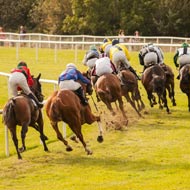
Industry urged to maintain funding through independent body
A former president of the RCVS has called for a continuation of funding for equine veterinary research under proposed changes to the Horserace Betting Levy.
Professor Lord Trees made the assertion during a debate in parliament about what progress has been made towards the introduction of the Horserace Betting Right.
In March the Government outlined its aim to replace the current betting levy by April 2017. The proposed Horserace Betting Right would extend the right to claim levy payments from bookmakers who had moved their operations overseas.
Since the inception of the Levy in 1961, the Horserace Betting Levy Board (HBLB) has contributed greatly to equine veterinary research and advancement.
Speaking in the House of Lords on Wednesday (20 April), Lord Trees highlighted the importance of veterinary research to the industry. He urged the government to maintain or increase funding, and to ensure that such funding is administered by an independent body.
“Since its inception in the 1960s, the HBLB has contributed some £50 million to equine veterinary research and education,” he said.
“It is vital that such support is maintained by the new arrangements, not only because the industry depends on the health and welfare of its racehorses but because there are no alternative funding sources of such support, with the exception of one or two charities, such as the Horse Trust.”
Lord Trees highlighted some of the major advances that have come about as a result of the funding, such as the recognition of micro-fractures and their early diagnosis by advanced imaging. This has enabled horses to be retired before the possibility of catastrophic major bone fractures during racing.
He also noted that, thanks to disease surveillance and vaccine development, not a single race meeting has been cancelled as a result of an outbreak of infectious disease for over 20 years.
"The continuation of this support is essential and should be given through a body that is transparent and independent, analogous to the HBLB Veterinary Advisory Committee,” concluded Lord Trees.
“Can the Minister assure this House, first, that the level of current funding for equine veterinary research will be maintained or even increased by the proposed new arrangements and, secondly, that such funding will be administered by a body that is independent? Let us not forget that the health of racing depends on the health of the horses on which it relies.”
Decisions about where money raised from the scheme will go to will be decided by the racing industry.
Also speaking at the debate, Lord Collins of Highbury stated: “It is in the interests of racing as a whole that the funds raise benefit the entire industry. The current levy has supported the advancement of veterinary science, and I very much hope as do other noble Lords, that it will continue.”

 BVA has announced a new series of its Building Great Workplaces lunchtime webinars.



