


Genetic factors could explain Labrador obesity
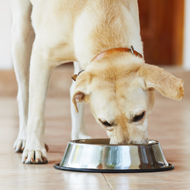
"People who live with Labradors often say they are obsessed by food, and that would fit with what we know about this genetic change."
Scientists have discovered a genetic variation that could explain why Labradors appear to be more prone to obesity. Researchers believe their work may also offer "important lessons" for human health.
Labrador retrievers are the most popular breed of dog in the UK, US and many other countries. The breed is known for being 'food obsessed' and particularly prone to obesity.
New research published in the journal Cell Metabolism describes a variant of one gene, POMC, which scientists found to be strongly associated with weight, obesity and appetite in Labrador retrievers and flat coat retrievers.
The gene is known to be important in the brain's recognition of hunger and the feeling of being full after a meal. Around one in four (23 per cent) of Labradors are thought to carry at least one copy of this variant.
An international team led by the University of Cambridge studied 310 Labradors, including pets and assistance dogs. In both breeds, they found that for each copy of the gene carried, the dog was 1.9kg heavier.
Lead author Dr Eleanor Raffan, explained: "This is a common genetic variant in Labradors and has a significant effect on those dogs that carry it, so it is likely that this helps explain why Labradors are more prone to being overweight in comparison to other breeds…
"People who live with Labradors often say they are obsessed by food, and that would fit with what we know about this genetic change."
But the picture is "not straightforward", Dr Raffan added, as the variant is even more common in flat coat retrievers, a breed that has not previously been flagged as being obesity-prone.
Senior co-author Dr Giles Yeo said Labrador owners need to be aware of their dog's susceptibility to obesity, in order to actively manage their dog's weight. Labradors are eager to please and relatively easy to train, which is what makes them particularly successful pet and working dogs. Carrying the variant may make dogs more motivated to work for food, but it is a "double-edged sword", as it may also make them more likely to gain weight.
Gaining a better understanding of the POMC gene may also have important implications for human health.
Professor Stephen O'Rahilly, co-director of the Wellcome Trust-Medical Research Council Institute of Metabolic Science at the University of Cambridge, said:
"Common genetic variants affecting the POMC gene are associated with human body weight and there are even some rare obese people who lack a very similar part of the POMC gene to the one that is missing in the dogs. So further research in these obese Labradors may not only help the wellbeing of companion animals but also have important lessons for human health."


 BVA has announced a new series of its Building Great Workplaces lunchtime webinars.



