
Your data on MRCVSonline
The nature of the services provided by Vision Media means that we might obtain certain information about you.
Please read our Data Protection and Privacy Policy for details.

In addition, (with your consent) some parts of our website may store a 'cookie' in your browser for the purposes of
functionality or performance monitoring.
Click here to manage your settings.
If you would like to forward this story on to a friend, simply fill in the form below and click send.

Your friend's email:
Your email:
Your name:
 
 
Send Cancel

Vets urged to be vigilant for lumpy skin disease
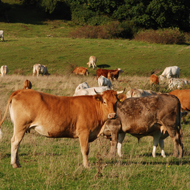
cows
LSD was detected in the European Union for the first time last August, when Greece reported two outbreaks.
Early recognition is 'imperative'
 
Vets are being urged to look out for skin wheals and unexplained abortions in cattle this summer and autumn, as these could be early signs of lumpy skin disease (LSD).

Once confined to Africa, LSD was detected in the European Union for the first time last August, when Greece reported two outbreaks.

More than 100 further outbreaks occurred between September and December 2015 and the disease reappeared in April of this year. Almost simultaneously, it was found in a second EU country, Bulgaria, and the Former Yugoslav Republic of Macedonia.

Professor Kenton Morgan, from the University of Liverpool, wrote in Veterinary Record (Vol 178 No 20) letters: 'Early recognition is imperative in limiting the impact of novel or exotic diseases.

'Where clinical signs are easily visible, as is the case with LSD, there is a need for those who regularly observe cattle… to be vigilant for the appearance of skin wheals or lumps. Skin wheals, whether palpable or visible, and unexplained abortions should trigger the addition of LSD to the list of differential diagnoses. Look out also for swelling in the legs and lymph nodes.'

The transmission of LSD is not well understood, making it difficult to assess the risk of spread, Prof Morgan added. Vaccination is a major control strategy.


Become a member or log in to add this story to your CPD history

Equine Disease Surveillance report released for Q4 2025

News Story 1
 The latest Equine Disease Surveillance report has been released, with details on equine disease from Q4 of 2025.

The report, produced by Equine Infectious Disease Surveillance, includes advice on rule changes for equine influenza vaccination.

Statistics and maps detail recent outbreaks of equine herpes virus, equine influenza, equine strangles and equine grass sickness. A series of laboratory reports provides data on virology, bacteriology, parasitology and toxicosis.

This issue also features a case study of orthoflavivus-associated neurological disease in a horse in the UK. 

Click here for more...
News Shorts
NSA webinar explores sheep tailing and castration

The National Sheep Association (NSA) is to host a free webinar on the castration and tail docking of lambs.

The webinar, 'Understanding the tailing and castration consultation: A guide for sheep farmers', will be hosted online on Monday, 2 March 2026 at 7.30pm.

It comes during a government consultation into the methods used for these procedures. Farmers are encouraged to engage before the consultation period closes on Monday, 9 March 2026.

The webinar offers clear and actionable guidance to support farmers to contribute meaningfully to the consultation and prepare for potential changes.

On the panel will be former SVS president Kate Hovers, farmer and vet Ann Van Eetvelt and SRUC professor in Animal Health and Veterinary Sciences Cathy Dwyer. Each panel member will utilise their own specialism and expertise to evaluate risks and outcomes to sheep farming.

Find out more about the webinar on the NSA website.

