


Alpacas are susceptible to MERS-CoV, study finds
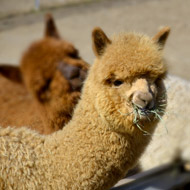
The discovery paves the way for further research to determine whether alpacas may be another livestock reservoir.
Alpacas are susceptible to natural infection with Middle East respiratory syndrome coronavirus (MERS-CoV), new research has shown. The discovery paves the way for further research to determine whether alpacas may be another livestock reservoir.
Writing in a letter published in Emerging Infectious Diseases, the authors say there is growing evidence that dromedary camels are a reservoir for zoonotic transmission of MERS-CoV.
The team studied 15 healthy alpacas from a herd of 20 and 10 healthy dromedaries from a herd of 25. Both the camels and alpacas were kept as hobby animals at a farm in the Al Shahaniya region of Qatar, where there is extensive and continuous circulation of MERS-CoV - most likely due to an international camel racing track and numerous barns housing camels.
MERS-CoV specific antibodies were found in all of the alpacas and all but one of the camels.
Authors wrote: 'The observed natural susceptibility of alpacas for natural MERS-CoV infection potentiates a broadening of the geographic range of MERS-CoV circulation to areas with large populations of alpacas.'
The findings also call into question whether other camelids could become infected, they added.
Another study published in the journal suggests alpacas could be used as a model for MERS-CoV infection in camels, particularly for the development of vaccines. Infection trials involving camels can be challenging due to the need to handle and house them in high containment facilities.
All three alpacas that were experimentally infected with MERS-CoV became infected, while two out of three alpacas to have close contact with the infected animals became infected themselves. The infected animals were also found to shed large quantities nasally.
These findings suggest that infection can spread easily among closely grouped camelids researchers say. Within the Middle East, camels are frequently moved for grazing, camel shows and races, which enables close mingling of the animals and could play a major role in MERS-CoV transmission among animals and handlers.


 BVA has announced a new series of its Building Great Workplaces lunchtime webinars.



