
Your data on MRCVSonline
The nature of the services provided by Vision Media means that we might obtain certain information about you.
Please read our Data Protection and Privacy Policy for details.

In addition, (with your consent) some parts of our website may store a 'cookie' in your browser for the purposes of
functionality or performance monitoring.
Click here to manage your settings.
If you would like to forward this story on to a friend, simply fill in the form below and click send.

Your friend's email:
Your email:
Your name:
 
 
Send Cancel

Dogs find illegal ivory 'within minutes'
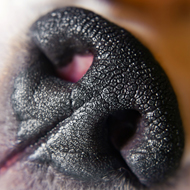
dog nose
The dog team and their handlers are able to detect a range of illegal wildlife products, arms and ammunition. (stock photo)
Specially trained team celebrates first find in Tanzania
 
A pair of specially trained sniffer dogs have nabbed their first haul of illegal ivory, the Wildlife Conservation Society (WCS) reports.

The dog team and their handlers from Tanzanian National Parks (TANAPA) are able to detect a range of illegal wildlife products, arms and ammunition.

On 13 August, they were given instructions to carry out a late night house search in a village outside Tanzania's Ruaha National Park, after authorities received a report of illegal ivory being stored in a residence.

Within minutes of searching the compound outside the house, Belgian malinois dog Jenny found something hidden underneath a parked vehicle. Her keen sense of smell had led the team to four concealed tusks hidden in plastic. According to TANAPA officials, the tusks are small and presumed to be from young elephants that had not yet reached middle age.

One man has been taken into custody and is helping authorities with their enquiries.

WCS conservationists say the successful seizures and arrests are the result of two years' work, which involved building safe kennels, training dogs and handlers, ensuring the health of the dogs in Ruaha and equipping a specialist vehicle.

WCS project director Aaron Nicholas said: "This ivory bust shows what a powerful tool the detection dog unit is. It adds to the government's strategy to curb elephant poaching in Tanzania. Well done to the TANAPA handlers and staff and our four-legged front line friends."

Dr Tim Davenport, WCS country director in Tanzania, also warned: "This arrest is a very clear warning to those wanting to poach elephants in the Ruaha-Rungwa landscape. Jenny and Dexter are now on duty, and they will find you."


Become a member or log in to add this story to your CPD history

Equine Disease Surveillance report released for Q4 2025

News Story 1
 The latest Equine Disease Surveillance report has been released, with details on equine disease from Q4 of 2025.

The report, produced by Equine Infectious Disease Surveillance, includes advice on rule changes for equine influenza vaccination.

Statistics and maps detail recent outbreaks of equine herpes virus, equine influenza, equine strangles and equine grass sickness. A series of laboratory reports provides data on virology, bacteriology, parasitology and toxicosis.

This issue also features a case study of orthoflavivus-associated neurological disease in a horse in the UK. 

Click here for more...
News Shorts
NSA webinar explores sheep tailing and castration

The National Sheep Association (NSA) is to host a free webinar on the castration and tail docking of lambs.

The webinar, 'Understanding the tailing and castration consultation: A guide for sheep farmers', will be hosted online on Monday, 2 March 2026 at 7.30pm.

It comes during a government consultation into the methods used for these procedures. Farmers are encouraged to engage before the consultation period closes on Monday, 9 March 2026.

The webinar offers clear and actionable guidance to support farmers to contribute meaningfully to the consultation and prepare for potential changes.

On the panel will be former SVS president Kate Hovers, farmer and vet Ann Van Eetvelt and SRUC professor in Animal Health and Veterinary Sciences Cathy Dwyer. Each panel member will utilise their own specialism and expertise to evaluate risks and outcomes to sheep farming.

Find out more about the webinar on the NSA website.

