


VNs learn how to safely anaesthetise unusual animals
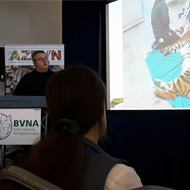
Matthew explained that VNs should assess how each individual's system works.
"It's not good enough to just assume everything and think 'I've anaesthetised thousands of dogs, therefore I should be able to anaesthetise a snake'. You need to be thinking of it as a whole picture".
Those were the words of RVN Matthew Rendle, speaking at the BVNA Congress in Telford this afternoon (8 October).
Matthew, a senior clinical nurse at ZSL London Zoo gave an informative and interesting talk on safe anaesthesia of non-familiar exotic species.
Looking at various species - from snakes, parrots and flamingoes, to ducks and even octopi - Matthew explained that VNs should assess how each individual's system works.
For example, how does the animal breathe once CNS is suppressed, does it only breathe in one way, and what stimulates it to breathe?
Speaking to around 200 delegates, Matthew discussed why it was important to control, monitor and evaluate the brain, heart and lungs while the animal is under anaesthesia. He also described the importance of documenting the procedure for future use.
"Good anaesthesia is intuitive, measured and precise," said Matthew. "It's about understanding as much as possible what is normal for that species, understanding what everyone is hoping to get out of the procedure and understanding what animal it is to avoid compromising its welfare".
He added that it was essential to prepare everything that might be required for the procedure, and to be familiar with all the equipment.


 Defra has published guidance for the vet sector ahead of a proposed UK-EU Sanitary and Phytosanitary agreement.



