


Disease risk from exotic pets is 'unpredictable'
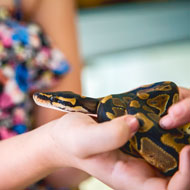
Although keeping reptiles away from children is a "pretty standard" recommendation, the safety messages are not getting through.
An expert in infectious diseases has warned that researchers know little about the diseases carried by some exotic species, meaning the threats posed to human health are unknown.
"I can tell you pretty well what a dog or a cat or a rabbit is likely to carry, what the risk is and what we can do to decrease that risk," Professor Scott Weese from the University of Guelph in Canada told The Winnepeg Sun. "But the farther you get from these typical, domestic species, the less we know and the more you get surprised."
He gave the example of the 2003 outbreak of monkeypox in 47 people in the US. It was the first time human monkeypox had been reported outside of Africa and was traced back to large rodents imported to Ghana from Texas.
"These are healthy animals that get shipped to the US legally and then they get mixed with the prairie dogs, and prairie dogs are very susceptible to monkeypox we know now - we didn't know then - and the prairie dogs were infecting people," he added.
"So just an example… the less we know about a species and the more we bring them out of their normal environment, they can get into some really completely unpredictable risks."
Prof Weese said each year a large number of salmonella cases in Canada are traced back to contact with reptiles, particularly in children. Although he says keeping reptiles away from children is a "pretty standard" recommendation, the vast number of companies offering exotic animals for children's birthday parties and other events suggest the safety messages are not getting through.
The disease risk also works the other way, with marmoset monkeys being particularly vulnerable to the herpes simplex virus carried by humans - which sometimes presents as a cold sore.
Public Health Ontario is working to educate the public on keeping pets safely, with particular emphasis on not kissing animals or letting them sleep in the bed. However, for children under five, the elderly and immune-compromised individuals, infection can spread through indirect contact with animals.
As well as disease, there is also the risk of injury from large, non-domesticated animals. And there are welfare issues for the animals themselves, who are often kept as single pets - despite the fact they may live in social groups in the wild - by owners who do little research into their care.


 Defra has published guidance for the vet sector ahead of a proposed UK-EU Sanitary and Phytosanitary agreement.



