
Your data on MRCVSonline
The nature of the services provided by Vision Media means that we might obtain certain information about you.
Please read our Data Protection and Privacy Policy for details.

In addition, (with your consent) some parts of our website may store a 'cookie' in your browser for the purposes of
functionality or performance monitoring.
Click here to manage your settings.
If you would like to forward this story on to a friend, simply fill in the form below and click send.

Your friend's email:
Your email:
Your name:
 
 
Send Cancel

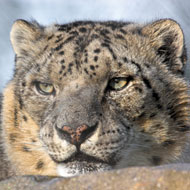
Endangered snow leopards illegally killed in hundreds
snow leopard
The report estimates the number of annual killings to be between 221 and 450 since 2008.

Report unveils a minimum of four per week poached

A new report by TRAFFIC has found that the estimated 4,000 remaining snow leopards are under constant threat of illegal poaching across Asia’s high mountains.

‘An Ounce of Prevention: Snow Leopard Crime’ estimates annual figures of between 221-450 killings since 2008. However, actual figures accounting for undetected remote killings are suspected to be higher.

As a part of the Global Snow Leopard Ecosystem Protection Program (GSLEP), the 12 snow leopard range countries address the ongoing threat faced by the species. According to the report, over 90 per cent of reported poaching occurred in China, Mongolia, Pakistan, India and Tajikistan.

Despite the report citing a steep decline in trade of snow leopard skins, the numbers are still concerning. With only 21 per cent of poaching specifically for pelt and products, a further half of all retaliatory killings culminated in opportunistic sales and trade.

Work is underway to attempt to drastically reduce human-wildlife conflict.
Currently, predator proof corrals and compensation schemes are beginning to make a difference. However, reaching the higher and more remote mountains is more challenging.

The report recommends the ongoing maintenance of TRAFFIC’s snow leopard crime database for continued research. Lead author, Kristin Nowell said: “We need to expand efforts to monitor activity on the internet and social media as snow leopard traffickers may be moving online to try and evade law enforcement.”

The crime database was started in 1989 and will continue to serve as a resource in the efforts to protect the endangered species.


Become a member or log in to add this story to your CPD history

Equine Disease Surveillance report released for Q4 2025

News Story 1
 The latest Equine Disease Surveillance report has been released, with details on equine disease from Q4 of 2025.

The report, produced by Equine Infectious Disease Surveillance, includes advice on rule changes for equine influenza vaccination.

Statistics and maps detail recent outbreaks of equine herpes virus, equine influenza, equine strangles and equine grass sickness. A series of laboratory reports provides data on virology, bacteriology, parasitology and toxicosis.

This issue also features a case study of orthoflavivus-associated neurological disease in a horse in the UK. 

Click here for more...
News Shorts
RCVS annual renewal fee for vets due

RCVS' annual renewal fee for veterinary surgeons is now due. Vets must pay their renewal fee before Wednesday, 1 April 2026.

This year's standard annual fee has increased to 431 from last year's 418. This is an approximately three per cent increase, as approved by RCVS Council and the Privy Council.

Tshidi Gardner, RCVS treasurer, said: "The small fee increase will be used to help deliver both our everyday activities and our new ambitious Strategic Plan, which includes aims such as achieving new legislation, reviewing the Codes of Professional Conduct and supporting guidance, and continuing to support the professions through activities such as the Mind Matters Initiative, RCVS Academy and career development."

A full breakdown of the new fees is on the RCVS website. Information about tax relief is available on the UK government website.

