
Your data on MRCVSonline
The nature of the services provided by Vision Media means that we might obtain certain information about you.
Please read our Data Protection and Privacy Policy for details.

In addition, (with your consent) some parts of our website may store a 'cookie' in your browser for the purposes of
functionality or performance monitoring.
Click here to manage your settings.
If you would like to forward this story on to a friend, simply fill in the form below and click send.

Your friend's email:
Your email:
Your name:
 
 
Send Cancel

BVA launches new food procurement policy
eggs in basket
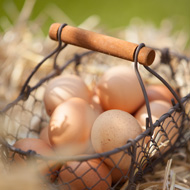
The BVA has pledged to use British and free range eggs whenever possible.
Checklist applies to all BVA meetings and events

A new food procurement policy that champions animal welfare sustainability and member priorities has been launched by the BVA.

The policy follows a recent BVA Voice of the Veterinary Profession survey, in which 90 per cent of members cited British as the most important factor when buying meat or dairy products.

The checklist that accompanies BVA’s food procurement policy lists British, free range, Marine Stewardship Council (MSC) Assured for fish that have not been farmed.  

It also lists either Red Tractor or RSPCA Assured as essential attributes that BVA food suppliers and retailers must meet as part of their service delivery. Local or seasonal food should be used whenever possible.

Commenting on the new policy, BVA president Gudrun Ravetz said: “Ensuring the health and welfare of sentient animals is important as a marker of social progress and expanding our roles in these areas and debates is a commitment we have made through the Vet Futures project,” she said.

“While our new food procurement policy might seem a small step towards assuring animal welfare within BVA’s suppliers and service delivery, it is an important step in turning words in to action and signals the importance the veterinary profession places on ensuring animal welfare is prioritised alongside other essential sustainability objectives such as environmental protection, food security and tackling AMR.”  

The new policy applies to all BVA meetings, events and dinners, as well as room hire at BVA’s Mansfield Street Office.

Other veterinary organisations and individual members are encouraged to adopt or use the policy as a good practice guide in their own working arrangements.


Become a member or log in to add this story to your CPD history

Equine Disease Surveillance report released for Q4 2025

News Story 1
 The latest Equine Disease Surveillance report has been released, with details on equine disease from Q4 of 2025.

The report, produced by Equine Infectious Disease Surveillance, includes advice on rule changes for equine influenza vaccination.

Statistics and maps detail recent outbreaks of equine herpes virus, equine influenza, equine strangles and equine grass sickness. A series of laboratory reports provides data on virology, bacteriology, parasitology and toxicosis.

This issue also features a case study of orthoflavivus-associated neurological disease in a horse in the UK. 

Click here for more...
News Shorts
NSA webinar explores sheep tailing and castration

The National Sheep Association (NSA) is to host a free webinar on the castration and tail docking of lambs.

The webinar, 'Understanding the tailing and castration consultation: A guide for sheep farmers', will be hosted online on Monday, 2 March 2026 at 7.30pm.

It comes during a government consultation into the methods used for these procedures. Farmers are encouraged to engage before the consultation period closes on Monday, 9 March 2026.

The webinar offers clear and actionable guidance to support farmers to contribute meaningfully to the consultation and prepare for potential changes.

On the panel will be former SVS president Kate Hovers, farmer and vet Ann Van Eetvelt and SRUC professor in Animal Health and Veterinary Sciences Cathy Dwyer. Each panel member will utilise their own specialism and expertise to evaluate risks and outcomes to sheep farming.

Find out more about the webinar on the NSA website.

