
Your data on MRCVSonline
The nature of the services provided by Vision Media means that we might obtain certain information about you.
Please read our Data Protection and Privacy Policy for details.

In addition, (with your consent) some parts of our website may store a 'cookie' in your browser for the purposes of
functionality or performance monitoring.
Click here to manage your settings.
If you would like to forward this story on to a friend, simply fill in the form below and click send.

Your friend's email:
Your email:
Your name:
 
 
Send Cancel

Avian flu confirmed in new locations
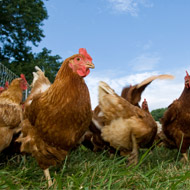
hens
A recent outbreak in a backyard flock in west Wales involved birds that had not been housed.
H5N8 detected in new countries and parts of the UK

New cases of H5N8 avian influenza have been detected in wild birds across the UK and a wigeon in Ireland. Slovakia and the Czech Republic have also reported the disease for the first time.

A new strain in Europe, H5N5, has also been reported in Italy, the Netherlands and Montenegro. The origin and significance of this is not yet known, although Defra believes the discovery is likely to be down to increased surveillance for H5N8.

Defra’s latest disease update shows H5N8 has been confirmed in mute swans at a swannery in Dorset; in a wigeon, a greylag goose, a white fronted goose and a Canada goose in Gloucestershire; wigeons in Leicestershire and Lincolnshire; pochards, a mallard, a cormorant and a black headed gull in Merseyside; and a teal in Conwy, North Wales.

As these bird species are commonly found across Europe, Defra says the results are no surprise. Updates on wild birds testing positive for the virus will now be posted on the APHA website on a weekly basis.

Defra also reveals that a recent outbreak in a backyard flock in west Wales involved birds that had not been housed. Chickens had been allowed to mix freely with Muscovy ducks. The site is just 18km from a wild bird that tested positive in Llanelli, Carmarthenshire. A prevention zone currently in place requires all poultry and captive birds to be kept indoors or separated from wild birds.

Investigations have concluded that there is no link between this outbreak and a previous outbreak at a turkey farm in Lincolnshire.

New countries reporting the disease are Ireland (a single wild wigeon), Slovakia and Czech Republic.

Outbreaks continue to be reported in Croatia, France, Germany, Poland and Sweden. Defra expects the virus to remain an issue for a ‘considerable time’.

Become a member or log in to add this story to your CPD history

Equine Disease Surveillance report released for Q4 2025

News Story 1
 The latest Equine Disease Surveillance report has been released, with details on equine disease from Q4 of 2025.

The report, produced by Equine Infectious Disease Surveillance, includes advice on rule changes for equine influenza vaccination.

Statistics and maps detail recent outbreaks of equine herpes virus, equine influenza, equine strangles and equine grass sickness. A series of laboratory reports provides data on virology, bacteriology, parasitology and toxicosis.

This issue also features a case study of orthoflavivus-associated neurological disease in a horse in the UK. 

Click here for more...
News Shorts
NSA webinar explores sheep tailing and castration

The National Sheep Association (NSA) is to host a free webinar on the castration and tail docking of lambs.

The webinar, 'Understanding the tailing and castration consultation: A guide for sheep farmers', will be hosted online on Monday, 2 March 2026 at 7.30pm.

It comes during a government consultation into the methods used for these procedures. Farmers are encouraged to engage before the consultation period closes on Monday, 9 March 2026.

The webinar offers clear and actionable guidance to support farmers to contribute meaningfully to the consultation and prepare for potential changes.

On the panel will be former SVS president Kate Hovers, farmer and vet Ann Van Eetvelt and SRUC professor in Animal Health and Veterinary Sciences Cathy Dwyer. Each panel member will utilise their own specialism and expertise to evaluate risks and outcomes to sheep farming.

Find out more about the webinar on the NSA website.

