


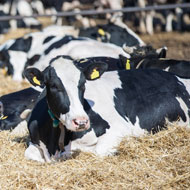
Local livestock farmers to receive £4 million in financial aid
A new plan to eliminate animals infected with BVD will begin in Northern Ireland in the next few weeks.
In November 2016, agriculture minister Michelle McIlveen revealed a £4 million scheme to support local livestock farmers, delivered under EU Exceptional Adjustment Aid (EAA).
The support scheme offers financial aid, as follows:
- £160 for a beef calf
- £130 for a dairy heifer calf
- £50 for a dairy male calf
The minister said: “The EAA package includes a scheme to incentivise the humane removal of BVD infected animals, as well as schemes to improve pig meat quality, manage soils and nutrients more effectively; and receive training in business planning and risk management.
“The required regulations were made and laid in the Assembly on 16 January 2017, and will come into operation on 1 February 2017. My department plans to open the BVD incentivisation scheme as soon as possible after that date.”
In order to receive payment, farmers must ensure that they meet the following criteria:
- The births of all animals have been recorded on APHIS, in accordance with Regulation Six of the Cattle Identification (notification of Birth, Deaths and Movements) Regulations (Northern Ireland) 1999
- Infected animals fully comply with the requirements of the BVD Eradication Scheme Order
- Animals have tested positive for the presence of BVD virus
- Infected animas have not been moved from the farm on which they were born
- Infected animals have been humanely destroyed
- The deaths of all infected animals have been confirmed on APHIS within four weeks of receiving a positive BVD test result. An additional two weeks will be allowed where an applicant elects for repeat analysis of an initial positive result.
In summary, only farmers who meet these requirements and have humanely destroyed animals, on or after 1 February 2017, will be eligible for payment.
The Department of Agriculture, Environment and Rural Affairs (DAERA) emphasised the need to register each death with APHIS-on-line or through the submission of MC1, to DAERA. The Department also stated that a clear process, as well as key dates and a scheme guidance, would be released in the coming weeks.

 BVA has announced a new series of its Building Great Workplaces lunchtime webinars.



