


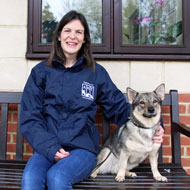
AHT team uncovers genetic mutations responsible
UK scientists have identified the genetic mutations responsible for serious eye diseases affecting Swedish vallhund and shar pei dogs.
New tests are now available for the conditions, which will allow breeders to make more informed choices about the dogs they breed, helping to reduce the number of dogs affected.
Animal Health Trust (AHT) scientists discovered the genetic mutations that cause retinopathy, a form of PRA, in Swedish vallhunds, and open angle glaucoma and primary lens luxation (POAG/PLL) in shar peis.
Dr Cathryn Mellersh, head of canine genetics at AHT said: “These tests will arm Swedish vallhund and shar pei owners with a new tool to better identify, and control, these eye problems which are both quite serious.
"Dogs with PRA can cope well with the disease but most will suffer from progressive visual impairment as there is no effective treatment available, whereas the build-up of pressure in the eye associated with glaucoma is extremely painful, and also blinding, if treatment is not effective…
“If used well, these scientific discoveries will help to improve the lives of countless generations of dogs who don’t have to be affected by these blinding diseases any more, giving them the gift of sight.”
Finnish researchers working with affected Swedish vallhunds previously found a region of DNA that contains a gene in which mutations have been shown to cause retinal degeneration in humans and rodents. AHT scientists have since found the specific mutation, leading to the development of a new DNA test.
Shar pei dogs are known to be affected by POAG and have also been reported to suffer from PLL. The AHT discovered that both conditions appear to be caused by the same mutation.
Primary glaucoma is a painful and sight-threatening disease associated with high pressure in the eye. In POAG/PLL, reduced drainage of fluid from the eye causes a build up of pressure, leading to pain and blindness.
Researchers say all three eye conditions appear to show an autosomal recessive mode of inheritance, meaning two copies of the mutation are required for dogs to develop them. To avoid breeding dogs with the conditions, AHT advises that at least one parent should be clear of the mutation.
AHT encourages breeding with carriers for the first few generations at least. Carriers should always be mated with dogs that have been DNA tested and are clear. If a carrier is bred with another carrier, 25 per cent of the litter will be affected on average, 50 per cent will be carriers and 25 per cent will be clear of the disease. If a carrier is bred to a clear dog, none of the offspring will be affected but 50 per cent will be carriers.
Tests for both retinopathy in Swedish vallhunds and POAG/PLL in shar peis are now available. The DNA tests cost £48 each and can be ordered from www.ahtdnatesting.co.uk.
Image ©AHT


 BVA has announced a new series of its Building Great Workplaces lunchtime webinars.



