


Dogs and toddlers show similarities in social intelligence
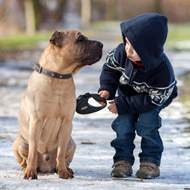
Dogs and two-year-old children are more similar in social intelligence than two-year-old children are to chimpanzees.
A study by US researchers has revealed that dogs may be more like humans than previously thought.
Published in the journal Animal Behaviour, the study found that dogs and two-year-old children are more similar in social intelligence than two-year-old children are to chimpanzees.
Experts believe the findings could help scientists better understand how humans evolved socially. Evan Maclean, director of the Arizona Canine Cognition Centre at the University of Arizona, explains:
"What we found is that there's this pattern, where dogs who are good at one of these social things tend to be good at lots of the related social things, and that's the same thing you find in kids, but you don't find it in chimpanzees," he said.
The team believes one explanation for the similarities between dogs and humans is that the two species may have evolved under similar pressures that favoured “survival of the friendliest,” with benefits and rewards for behaviour that is more cooperative.
"Our working hypothesis is that dogs and humans probably evolved some of these skills as a result of similar evolutionary processes, so probably some things that happened in human evolution were very similar to processes that happened in dog domestication," MacLean said. "So, potentially, by studying dogs and domestication we can learn something about human evolution."
In the study, MacLean and his collaborators assessed more than 500 dogs, including pet dogs, assistance dogs in training and military explosive detection dogs, representing a variety of different breeds.
The researchers measured social cognition through various tests, in which they hid toys and treats and then communicated the hiding places through nonverbal cues - such as a pointing finger.
The data were then compared to the results of 105 two-year-old children and 106 chimpanzees, who previously completed a similar cognitive test.


 BVA has announced a new series of its Building Great Workplaces lunchtime webinars.



