
Your data on MRCVSonline
The nature of the services provided by Vision Media means that we might obtain certain information about you.
Please read our Data Protection and Privacy Policy for details.

In addition, (with your consent) some parts of our website may store a 'cookie' in your browser for the purposes of
functionality or performance monitoring.
Click here to manage your settings.
If you would like to forward this story on to a friend, simply fill in the form below and click send.

Your friend's email:
Your email:
Your name:
 
 
Send Cancel

New learning resource for brachycephalic breeds
The Kennel Club has launched a Brachycephalic Obstructive Airway Syndrome (BOAS) online learning resource on the Kennel Club Academy.

Resource provides peer-reviewed literature and advice 

A new online resource for Brachycephalic Obstructive Airway Syndrome (BOAS) has been launched by the Kennel Club.

Available on the Kennel Club Academy, the resource provides free and accessible education to those with an interest in BOAS. It also includes research being undertaken at Cambridge University with brachycephalic dog breeds.

“Brachycephalic breeds require experienced owners and this resource will allow viewers to make an informed decision as to whether these breeds are right for them and will alert them to what they should be looking out for when buying a dog,” said Caroline Kisko, Kennel Club secretary.

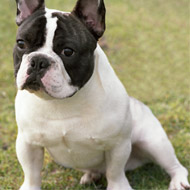
In recent years, breeds such as the pug and French bulldog have seen a surge in popularity. The trend, fuelled by celebrities and advertising, has led to many owners purchasing puppies on a whim - unaware of what is abnormal and the consequence of symptoms associated with ‘cute’ features.

The online learning resource includes an educational film explaining the steps being made in brachycephalic research through surgical intervention, diagnostic measures and genetic markers.

Funded by the Kennel Club Charitable Trust, the film also highlights the importance of seeing puppies with their parents. It gives advice on how to observe the health and breathing of the parents, and the importance of health testing. It also features case studies of owners, who bought a puppy without knowing the health history of the parents, and the consequences this had on their dog’s quality of life.

In addition to the film, the resource provides written information such as peer-reviewed scientific literature and advice from breed clubs, councils and canine charities.

The Kennel Club hopes the information will give those within the veterinary profession - from students to well-established professionals - the tools to diagnose BOAS before it progresses into severe stages.
Subscribers can test their knowledge with an online BOAS assessment.

Image (C) Diane Pearce Collection/Kennel Club Picture Library

Become a member or log in to add this story to your CPD history

Equine Disease Surveillance report released for Q4 2025

News Story 1
 The latest Equine Disease Surveillance report has been released, with details on equine disease from Q4 of 2025.

The report, produced by Equine Infectious Disease Surveillance, includes advice on rule changes for equine influenza vaccination.

Statistics and maps detail recent outbreaks of equine herpes virus, equine influenza, equine strangles and equine grass sickness. A series of laboratory reports provides data on virology, bacteriology, parasitology and toxicosis.

This issue also features a case study of orthoflavivus-associated neurological disease in a horse in the UK. 

Click here for more...
News Shorts
NSA webinar explores sheep tailing and castration

The National Sheep Association (NSA) is to host a free webinar on the castration and tail docking of lambs.

The webinar, 'Understanding the tailing and castration consultation: A guide for sheep farmers', will be hosted online on Monday, 2 March 2026 at 7.30pm.

It comes during a government consultation into the methods used for these procedures. Farmers are encouraged to engage before the consultation period closes on Monday, 9 March 2026.

The webinar offers clear and actionable guidance to support farmers to contribute meaningfully to the consultation and prepare for potential changes.

On the panel will be former SVS president Kate Hovers, farmer and vet Ann Van Eetvelt and SRUC professor in Animal Health and Veterinary Sciences Cathy Dwyer. Each panel member will utilise their own specialism and expertise to evaluate risks and outcomes to sheep farming.

Find out more about the webinar on the NSA website.


