


Blue Cross launches appeal for horse toys
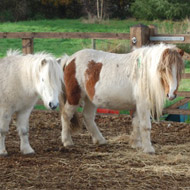
Feral ponies are accustomed to living on moorland, mountains or heathland where they are free to display their natural behaviours.
An appeal for horse toys to help enrich the lives of rescued feral ponies has been launched by the Blue Cross.
Based at the charity’s centre in Rolleston, Staffordshire, many of the ponies were taken in a pitiful state of health, having been rounded up and left unclaimed on Bodmin Moore.
Now the charity is calling for items such as play balls, mouthing fence toys and scratching mats to support their mental health and development while they are being rehabilitated.
In the UK, feral ponies are accustomed to living on moorland, mountains or heathland where they are free to display their natural behaviours and satisfy their curiosity. Sadly for the Bodmin Moor ponies, over-crowding, together with poor grazing, has made life difficult for them to survive in their natural environment.
At its Staffordshire and Oxfordshire centres, Blue Cross has designed buildings, stables and fields to minimise stress and enhance natural traits as much as possible. In addition to providing large barns and fields, the charity ensures the horses are kept in carefully selected groups that can physically interact with each other. For feral horses, however, this is not enough.
“With the young Bodmin ponies we have noticed that they spend a lot of time being destructive and play fighting. Less than a year ago they roamed freely across the moors, able to play in streams, and across a varied terrain of hills, woods and stony out crops," explains rehoming centre manager Tess Scott-Adams.
“Making the transition to a life of relative confinement is hard for them, no matter the excellent quality of the environment we are able to provide here at Blue Cross. Providing them with additional enrichment in the form of horse toys gives them something else to interact with and helps stimulate their inquisitive minds.”
For more information about the appeal and to find out how you can help support Blue Cross visit: www.bluecross.org.uk


 Defra has published guidance for the vet sector ahead of a proposed UK-EU Sanitary and Phytosanitary agreement.



