


Majority of attacks occur in England and Wales
A major campaign on air guns has been launched by Cats Protection to bring England and Wales in line with the rest of the UK.
According to the charity, a lack of UK-wide regulation means that the vast majority of airgun attacks (90 per cent) occur in England and Wales.
Since 2004, anyone who buys owns or uses an air gun in Northern Ireland must have a license to do so. Scotland implemented similar legislation earlier this year.
Now Cats Protection has launched an online petition, urging the government to bring in regulation to the rest of the UK.
“Cats and other animals in England and Wales are hugely vulnerable to being the victim of an air gun attack because there is nothing to stop air guns falling into the wrong hands,” said Jacqui Cuff, Cats Protection’s advocacy manager.
“Scotland and Northern Ireland have already taken action to address this, having brought in the strict regulations to regulate who can own such deadly weapons. Cats Protection believes it’s time the rest of the UK caught up and cat owners and communities in England and Wales can be afforded with the same peace of mind.”
In 2016, more than 200 incidents of cats were reportedly shot by an air gun. Crucially 90 per cent of these attacks occurred in England and Wales.
Cats Protection claim that around half of all cats hit by an air weapon die as a result of their injuries. Those that do survive endure considerable suffering and can be left with life-changing injuries.
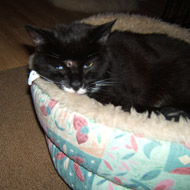
One cat that is still reeling from an air gun attack is Choas. In September 2016, Chaos was shot between her eyes whilst out and about in Neath, South Wales. The pellet just missed her brain and lodged in the muscle between her spine and gullet, where it remains.
The bullet shattered the bones in chaos’ nose, making her unable to breathe except through her mouth. This prevented her from eating and drinking.
Chaos was fitted with a feeding tube and she is now able to eat and drink again. But she has only ventured outside once since her attack and was spooked by the lights outside. Cats Protection says this supports the vet’s theory that a light was shone in her face to temporarily blind her before being shot.
To watch Cats Protection's campaign video and to find out more about the campaign, visit www.cats.org.uk/airgunspetition.
Image (C) Cats Protection


 BVA has announced a new series of its Building Great Workplaces lunchtime webinars.



