
Your data on MRCVSonline
The nature of the services provided by Vision Media means that we might obtain certain information about you.
Please read our Data Protection and Privacy Policy for details.

In addition, (with your consent) some parts of our website may store a 'cookie' in your browser for the purposes of
functionality or performance monitoring.
Click here to manage your settings.
If you would like to forward this story on to a friend, simply fill in the form below and click send.

Your friend's email:
Your email:
Your name:
 
 
Send Cancel

Rabies warning over pets bought online
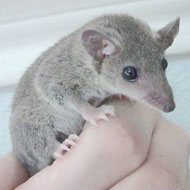
short tailed opossum
“Smuggled or illegally imported mammals have a very high risk of being infected with rabies."

Opossums with no rabies vaccinations seized from pet shop
 
Cornwall Trading Standards is warning the public about the risks of buying pets online, after seizing illegally imported short-tailed opossums from a pet shop in the Midlands.

The animals were being sold online and had no import papers or rabies vaccinations, meaning they could have been infected with rabies and may even have been stolen from the wild.

Cornwall Council’s Quality Standards and Animal Health team raided a property in the town of Lostwithiel, after an alert that three opossums could have been sent to the county. However, no animals were found and it became apparent that the animals had not been delivered to Cornwall.

Jane Tomlinson, Cornwall Trading Standards manager, advised: “Smuggled or illegally imported mammals have a very high risk of being infected with rabies. This is often a fatal disease in humans, and is always fatal to animals. 

“Once again I urge everyone not to buy animals over the internet, and ensure you see the parents of any young animals before purchase.  If animals are taken from the wild there is also a risk to the future conservation of species.”

Cornwall Council has investigated five cases of illegally imported animals in the past year, several of which involved an animal bought over the internet, and resulted in large veterinary bills and animals being placed in quarantine.

Illegally imported animals face immediate quarantine at the owner’s expense, or they must be exported back to the country of origin, again at the owner’s expense. If the owner refuses to have their animal quarantined or exported, the animal will be seized and euthanised and the council can recover the cost through prosecution.

Anyone with information regarding the illegal import of exotic animals should contact Trading Standards on 0300 1234 191.

Image by Dawson/Wikimedia Commons CC BY-SA 2.5

Become a member or log in to add this story to your CPD history

Vets launch new podcast for pet owners

News Story 1
 Two independent vets have launched a podcast to help owners strengthen their bond with pets. Dr Maggie Roberts and Dr Vanessa Howie, who have worked in both veterinary practice and major charities, are keen to use their experience to enable people to give pets a better life.

The venture, called Vets Talking Pets, provides advice and information on a range of topics, including how to select a suitable pet, where to obtain them and how to get the best out of your vet. Maggie and Vanessa will also discuss sensitive subjects, including end-of-life care, raw food diets and the cost of veterinary care.

The podcast can be found on all the usual podcast sites, including Podbean, Apple, Amazon Music and YouTube. 

Click here for more...
News Shorts
VMD issues guidance on AVM-GSL packaging

The Veterinary Medicines Directorate (VMD) has shared advice on its requirements for medicines considered AVM-GSL.

The guidance explains the information that should be on the outer package, and sets out the typical maximum pack size for an AVM-GSL product. It also describes the user-friendly language, structure and phrases required on packaging and product leaflets.

AVM-GSL products do not require discussion between the purchaser and a veterinary professional. This means that clear product information is needed to support sales choices.

The information will be useful for submitting new products to the AVM-GSL category and lowering the distribution category of products from NFA-VPS to AVM-GSL.

The VMD's guidance can be accessed here.


