
Your data on MRCVSonline
The nature of the services provided by Vision Media means that we might obtain certain information about you.
Please read our Data Protection and Privacy Policy for details.

In addition, (with your consent) some parts of our website may store a 'cookie' in your browser for the purposes of
functionality or performance monitoring.
Click here to manage your settings.
If you would like to forward this story on to a friend, simply fill in the form below and click send.

Your friend's email:
Your email:
Your name:
 
 
Send Cancel

£5.5m funding for Africa’s livestock
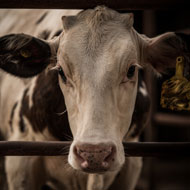
An initial programme aims to reduce death rates and reproductive losses in dairy cattle.
Vets delivering initiative to improve animal health

A multi-million pound initiative is underway to improve the health and productivity of farmed animals in sub-Saharan Africa.

Eight experts have been recruited to drive the Supporting Evidence Based Interventions (SEBI) initiative, which is based at the University of Edinburgh’s Royal (Dick) School of Veterinary Studies.

The £5.5 million project aims to boost the livelihoods of livestock farmers using evidence-based technologies that offer sustainable solutions to their challenges.

An initial programme aims to reduce death rates and reproductive losses in dairy cattle in Ethiopia, Nigeria and Tanzania. Sub-grants will help research groups to explore the causes of these losses. The University of Glasgow has received the first of these grants to build a disease surveillance platform in Tanzania.

A second programme will facilitate data gathering and the development of tools to better track livestock performance. An international network of practitioners, the Livestock Data for Decisions (LD4D) community to standardise data management across borders.

Finally, a third strand of the initiative will fund researchers to evaluate veterinary interventions for their use in developing countries. The University of Guelph has been granted £125,000 to fund field trials of a hand-held device that can detect animal diseases. Using this portable sensor, dairy farmers can quickly diagnose diseases in cows from a small amount of blood or milk.


Become a member or log in to add this story to your CPD history

Equine Disease Surveillance report released for Q4 2025

News Story 1
 The latest Equine Disease Surveillance report has been released, with details on equine disease from Q4 of 2025.

The report, produced by Equine Infectious Disease Surveillance, includes advice on rule changes for equine influenza vaccination.

Statistics and maps detail recent outbreaks of equine herpes virus, equine influenza, equine strangles and equine grass sickness. A series of laboratory reports provides data on virology, bacteriology, parasitology and toxicosis.

This issue also features a case study of orthoflavivus-associated neurological disease in a horse in the UK. 

Click here for more...
News Shorts
NSA webinar explores sheep tailing and castration

The National Sheep Association (NSA) is to host a free webinar on the castration and tail docking of lambs.

The webinar, 'Understanding the tailing and castration consultation: A guide for sheep farmers', will be hosted online on Monday, 2 March 2026 at 7.30pm.

It comes during a government consultation into the methods used for these procedures. Farmers are encouraged to engage before the consultation period closes on Monday, 9 March 2026.

The webinar offers clear and actionable guidance to support farmers to contribute meaningfully to the consultation and prepare for potential changes.

On the panel will be former SVS president Kate Hovers, farmer and vet Ann Van Eetvelt and SRUC professor in Animal Health and Veterinary Sciences Cathy Dwyer. Each panel member will utilise their own specialism and expertise to evaluate risks and outcomes to sheep farming.

Find out more about the webinar on the NSA website.

