
Your data on MRCVSonline
The nature of the services provided by Vision Media means that we might obtain certain information about you.
Please read our Data Protection and Privacy Policy for details.

In addition, (with your consent) some parts of our website may store a 'cookie' in your browser for the purposes of
functionality or performance monitoring.
Click here to manage your settings.
If you would like to forward this story on to a friend, simply fill in the form below and click send.

Your friend's email:
Your email:
Your name:
 
 
Send Cancel

Wasp named after Harry Potter character
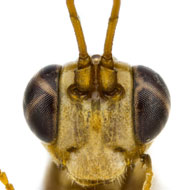
The native New Zealand wasp has been named after villainous Harry Potter character Lucius Malfoy.
Scientist hopes to redeem insect’s bad reputation

A New Zealand wasp has been named after villainous Harry Potter character Lucius Malfoy, in a bid to raise its profile.

Tom Saunders, a doctoral student at the University of Auckland, named the wasp Lusuis malfoyi. It is a native parasitoid wasp that does not sting or live in colonies.

It does, however, have a particularly gruesome reproductive technique that involves injecting eggs into the bodies of caterpillars. The larvae feed inside the caterpillar’s body as the host slowly dies.

Mr Saunders hopes to champion insects of which most New Zealanders have no knowledge. It is thought there are around 3,000 endemic species in New Zealand, of which only a third are known to science.

He said: “I used the name Lusuis malfoyi because Malfoy is a character in the books with a bad reputation who is ultimately redeemed and I’m trying to redeem the reputation of our native wasps.”

Lack of data could mean New Zealand is losing endemic species without even knowing it, Mr Saunders warned.

Parasitoid wasps are used as environmental tools in the country, and introduced species control a range of horticultural pests. Mr Saunders decided to work on improving methods for wasp capture during his masters degree.

“The big problem is lack of data, we do not know what species we have, how many there might be or what their host species are, so they can’t be included in conservation planning,” he explained.

“Much of my work in capturing them for my research was at the edge of the Waitakere Ranges so they can be found even in people’s backyards but most people don’t know anything about them.”

Image © Tom Saunders/University of Auckland

Become a member or log in to add this story to your CPD history

Vets launch new podcast for pet owners

News Story 1
 Two independent vets have launched a podcast to help owners strengthen their bond with pets. Dr Maggie Roberts and Dr Vanessa Howie, who have worked in both veterinary practice and major charities, are keen to use their experience to enable people to give pets a better life.

The venture, called Vets Talking Pets, provides advice and information on a range of topics, including how to select a suitable pet, where to obtain them and how to get the best out of your vet. Maggie and Vanessa will also discuss sensitive subjects, including end-of-life care, raw food diets and the cost of veterinary care.

The podcast can be found on all the usual podcast sites, including Podbean, Apple, Amazon Music and YouTube. 

Click here for more...
News Shorts
VMD issues guidance on AVM-GSL packaging

The Veterinary Medicines Directorate (VMD) has shared advice on its requirements for medicines considered AVM-GSL.

The guidance explains the information that should be on the outer package, and sets out the typical maximum pack size for an AVM-GSL product. It also describes the user-friendly language, structure and phrases required on packaging and product leaflets.

AVM-GSL products do not require discussion between the purchaser and a veterinary professional. This means that clear product information is needed to support sales choices.

The information will be useful for submitting new products to the AVM-GSL category and lowering the distribution category of products from NFA-VPS to AVM-GSL.

The VMD's guidance can be accessed here.


