


New study offers hope for ASF vaccine
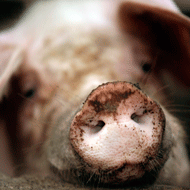
ASF currently has no vaccine but the disease is spreading further across Europe. (stock photo)
Genetically altering the African swine fever virus could offer the key to a much-needed vaccine for the deadly disease, Pirbright scientists say.
Researchers found that by deleting a gene of the virus, it was still able to replicate, but its ability to cause infection was dramatically reduced. The gene they deleted codes for a protein thought to play a role in suppressing the pig immune system.
All pigs involved in the study survived, and displayed only mild clinical signs. Furthermore, they were protected against further infection from a natural strain of ASFV, which causes severe disease.
ASF currently has no vaccine but the disease is spreading further across Europe, with outbreaks recently reported in Romania for the first time. Current prevention strategies are focused on import controls and educating farm owners, but the Pirbright Institute says these tools are not robust enough to stop the spread of disease across Eastern Europe and Russia.
The research team believe that further research could lead to an ASF vaccine. Their research shows the modified virus could be used as a component of a live attenuated vaccine, which contains a weakened version of the virus that is able to cause an immune response, without causing the animal harm.
However, issues with safety and effectiveness must be resolved before it is available commercially. The next step will be to make more gene deletions to reduce the clinical signs displayed by pigs after vaccination.
Dr Nixon added: “We will also be investigating the precise role the protein plays during infection. This information will help us understand how it interacts with the host immune system and if the protein directly prevents immune processes or if it has other roles we haven’t yet identified.
“Knowing more about the gene and protein will make it easier for us to modify the virus further and create a vaccine that is effective and safe.”
The findings have been published in the Journal of Virology.


 BVA has announced a new series of its Building Great Workplaces lunchtime webinars.



