
Your data on MRCVSonline
The nature of the services provided by Vision Media means that we might obtain certain information about you.
Please read our Data Protection and Privacy Policy for details.

In addition, (with your consent) some parts of our website may store a 'cookie' in your browser for the purposes of
functionality or performance monitoring.
Click here to manage your settings.
If you would like to forward this story on to a friend, simply fill in the form below and click send.

Your friend's email:
Your email:
Your name:
 
 
Send Cancel

New test to improve liver fluke control
“Looking to the future, reliance on deworming treatments alone is likely to be unsustainable."
Method aims to reduce immunity to treatments 

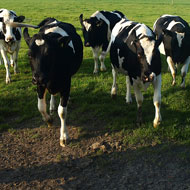
A new test to screen herds for liver fluke is promising to improve parasite control and reduce the risk of cattle developing immunity to existing treatments.

The new test involves collecting faecal samples from a number of cattle in the herd, analysing them in the lab and reporting a single count. It was developed as part of a project by the University of Liverpool, the Moredun Research Institute and AHDB.

Known as ‘composite faecal egg counting’, the new method is suitable for dairy and beef cattle. It allows herds to be screened for infection and targeted treatment administered as needed. AHDB says the test is ‘at least as good as other diagnostic methods’ when it comes to identifying infected herds.

“Controlling liver fluke is a difficult task, particularly because of emerging resistance to some of the flukicidal products used to treat cattle and sheep,” said Mary Vickers, senior scientist at AHDB Beef & Lamb.

“Looking to the future, reliance on deworming treatments alone is likely to be unsustainable so treatment informed by diagnosis is crucial for disease control.”

Cattle are infected with liver fluke through eating grass that is contaminated with cysts containing fluke eggs. These are shed from mud snails in damp, marshy areas of pasture. Wet weather during late summer is likely to increase the risk of infection on many farms this year, according to forecasts.

Liver fluke infection can lead to serious production losses, extending time to slaughter and reducing milk yield by up to 15 per cent.

The project team are now working to develop pen-side tests, allowing vets and farmers to give diagnostic results and targeted treatments immediately.

Become a member or log in to add this story to your CPD history

Equine Disease Surveillance report released for Q4 2025

News Story 1
 The latest Equine Disease Surveillance report has been released, with details on equine disease from Q4 of 2025.

The report, produced by Equine Infectious Disease Surveillance, includes advice on rule changes for equine influenza vaccination.

Statistics and maps detail recent outbreaks of equine herpes virus, equine influenza, equine strangles and equine grass sickness. A series of laboratory reports provides data on virology, bacteriology, parasitology and toxicosis.

This issue also features a case study of orthoflavivus-associated neurological disease in a horse in the UK. 

Click here for more...
News Shorts
NSA webinar explores sheep tailing and castration

The National Sheep Association (NSA) is to host a free webinar on the castration and tail docking of lambs.

The webinar, 'Understanding the tailing and castration consultation: A guide for sheep farmers', will be hosted online on Monday, 2 March 2026 at 7.30pm.

It comes during a government consultation into the methods used for these procedures. Farmers are encouraged to engage before the consultation period closes on Monday, 9 March 2026.

The webinar offers clear and actionable guidance to support farmers to contribute meaningfully to the consultation and prepare for potential changes.

On the panel will be former SVS president Kate Hovers, farmer and vet Ann Van Eetvelt and SRUC professor in Animal Health and Veterinary Sciences Cathy Dwyer. Each panel member will utilise their own specialism and expertise to evaluate risks and outcomes to sheep farming.

Find out more about the webinar on the NSA website.

