
Your data on MRCVSonline
The nature of the services provided by Vision Media means that we might obtain certain information about you.
Please read our Data Protection and Privacy Policy for details.

In addition, (with your consent) some parts of our website may store a 'cookie' in your browser for the purposes of
functionality or performance monitoring.
Click here to manage your settings.
If you would like to forward this story on to a friend, simply fill in the form below and click send.

Your friend's email:
Your email:
Your name:
 
 
Send Cancel

EFSA confirms low incidence of TSEs in the EU
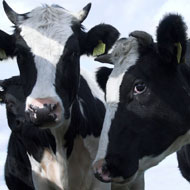
Five cases of BSE in cattle in the EU were reported in 2016 - none of which entered the food chain.

UK did not report any cases of the disease in 2016

The European Food Safety Authority (EFSA) has confirmed a low incidence of transmissible spongiform encephalopathies (TSEs) in the EU.

The findings are published in EFSA's second EU summary report which provides results of data gathered by EU Member States, Iceland, Norway and Switzerland for 2016.  It’s main findings are:

    •    five cases of BSE in cattle (out of 1,352,585 animals tested) in the EU – none of which entered the food chain. Only one of these was classified as classical BSE. The animal was born after the EU ban on the use of animal proteins in livestock feed was enforced in 2001.

    •    685 cases of scrapie in sheep (out of 286,351 tested) and 634 in goats (out of 110,832 tested) in the EU.

    •    no cases of CWD in any of the 2,712 cervids tested (e.g. reindeer, elk and moose) in the EU. However, five cases of CWD were reported in Norway: three in wild reindeer and two in moose.

For the first time since the BSE epidemic started, and BSE cases have been reported, the UK did not report any cases of the disease. 

Become a member or log in to add this story to your CPD history

Submissions open for BSAVA Clinical Research Abstracts 2026

News Story 1
 The BSAVA has opened submissions for the BSAVA Clinical Research Abstracts 2026.

It is an opportunity for applicants to present new research on any veterinary subject, such as the preliminary results of a study, discussion of a new technique or a description of an interesting case.

They must be based on high-quality clinical research conducted in industry, practice or academia, and summarised in 250 words.

Applications are welcome from vets, vet nurses, practice managers, and students.

Submissions are open until 6 March 2026. 

Click here for more...
News Shorts
Survey seeks ruminant sector views on antimicrobial stewardship

A new survey is seeking views of people working in the UK ruminant sector on how to tackle the challenge of demonstrating responsible antibiotic stewardship.

Forming part of a wider, collaborative initiative, the results will help identify the types of data available so that challenges with data collection can be better understood and addressed.

Anyone working in the UK farming sector, including vets and farmers,is encouraged to complete the survey, which is available at app.onlinesurveys.jisc.ac.uk


