


Marks & Spencer commits to poultry welfare campaign
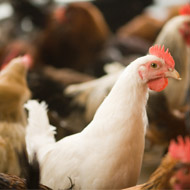
Marks & Spencer has pledged to farm a new, higher welfare breed of bird.
Marks & Spencer has become one of the first companies in the UK to pledge its support to a new EU poultry welfare campaign.
In a blog post, the retailer said that it had ‘committed to even more space in barns (a move to 30kg/m2)’ and to farm 'a new, higher welfare breed of bird’.
Head of Agriculture Steve McLean added: “Animal welfare is at the heart of our business and we know how important it is to our customers.
“I’m proud of our record and the farming standards behind our industry leading Oakham chicken, however, it is my responsibility to push the boundaries and test what can be achieved.”
The ‘European Broiler ASK’ campaign calls on food suppliers to raise welfare standards across their chicken supply chains by 2026. The guidelines have been drawn up by a number of animal welfare organisations across Europe, including the RSPCA and Compassion in World Farming.
The guidelines include a requirement that food suppliers ‘comply with all EU animal welfare rules and regulations, regardless of the country of production’ and that they ‘implement a maximum stocking density go 30kg/m2 or less’.
Furthermore, retailers who pledge their support to the campaign will be required to provide ‘at least 50 lux of light, including natural light’ and ‘at least two metres of usable perch space’.
Marks & Spencer states that its Oakham barns already have lots of natural daylight and features to improve the birds' living environment, such as bales for perching and objects for pecking.
'All other requirements (for example natural daylight, enriched environment, gas stunning and third-party auditing) are already met by Oakham standards,’ the blog post continues. 'But we will go further and work with all our suppliers, not just our Oakham chicken suppliers, to ensure they can meet the ‘ask’ by 2026.
'This will mean every piece of chicken sold by M&S, be it fresh or as an ingredient, will meet the new standards called for by welfare organisations. We’ll report on progress annually.’


 BVA has announced a new series of its Building Great Workplaces lunchtime webinars.



