
Your data on MRCVSonline
The nature of the services provided by Vision Media means that we might obtain certain information about you.
Please read our Data Protection and Privacy Policy for details.

In addition, (with your consent) some parts of our website may store a 'cookie' in your browser for the purposes of
functionality or performance monitoring.
Click here to manage your settings.
If you would like to forward this story on to a friend, simply fill in the form below and click send.

Your friend's email:
Your email:
Your name:
 
 
Send Cancel

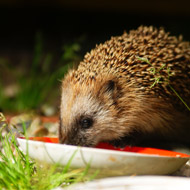
Rural hedgehogs in sharp decline, survey shows
Pesticides, increased field sizes and intensive farming are all associated with the fall in rural hedgehog numbers.

Conservationists to work more widely with farmers 

At least half of all native hedgehogs have been lost from the British countryside in the last 20 years, according to new figures.

The State of Britain’s Hedgehogs Report 2018 is published jointly by the British Hedgehog Preservation Society (BHPS) and People's Trust for Endangered Species (PTES).

It found that hedgehogs in rural areas are in sharp decline, with their numbers decreasing by around 50 per cent since the year 2000.

It is thought that pesticides, increased field sizes and intensive farming are all associated with the fall in numbers of hedgehogs in rural areas. The BHPS and the PTES are now planning to engage with the farming community to help conserve this iconic creature.

“Farmers play a vital role in producing food, but they’re also well placed to help protect, maintain and enhance our countryside,” explains Emily Wilson, hedgehog officer for Hedgehog Street, a public action campaign run by BHPS and PTES.

“The Government recently reiterated plans to reform the EU Common Agricultural Policy to reward landowners for delivering environmental benefits. Many farmers already have a sustainable approach to agriculture, and we think there’s a great opportunity to work more widely with them to stem the alarming decline of our country hedgehogs.”

The State of Britain’s Hedgehogs Report also highlights a more positive outlook for hedgehogs in urban areas. Whilst the species has fallen by a third in towns and cities since 2000, the rate of decline is slowing.

The survey also found that hedgehogs are not disappearing from urban green areas are fast as they were 15 years ago, and could even be returning. Interestingly, in some areas where hedgehogs are found, the numbers appear to be growing.


Become a member or log in to add this story to your CPD history

Equine Disease Surveillance report released for Q4 2025

News Story 1
 The latest Equine Disease Surveillance report has been released, with details on equine disease from Q4 of 2025.

The report, produced by Equine Infectious Disease Surveillance, includes advice on rule changes for equine influenza vaccination.

Statistics and maps detail recent outbreaks of equine herpes virus, equine influenza, equine strangles and equine grass sickness. A series of laboratory reports provides data on virology, bacteriology, parasitology and toxicosis.

This issue also features a case study of orthoflavivus-associated neurological disease in a horse in the UK. 

Click here for more...
News Shorts
NSA webinar explores sheep tailing and castration

The National Sheep Association (NSA) is to host a free webinar on the castration and tail docking of lambs.

The webinar, 'Understanding the tailing and castration consultation: A guide for sheep farmers', will be hosted online on Monday, 2 March 2026 at 7.30pm.

It comes during a government consultation into the methods used for these procedures. Farmers are encouraged to engage before the consultation period closes on Monday, 9 March 2026.

The webinar offers clear and actionable guidance to support farmers to contribute meaningfully to the consultation and prepare for potential changes.

On the panel will be former SVS president Kate Hovers, farmer and vet Ann Van Eetvelt and SRUC professor in Animal Health and Veterinary Sciences Cathy Dwyer. Each panel member will utilise their own specialism and expertise to evaluate risks and outcomes to sheep farming.

Find out more about the webinar on the NSA website.

