


Defra announces review of bTB strategy
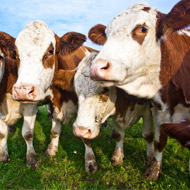
Recent figures from Defra show that the number of cattle slaughtered due to bTB crossed the 40,000 barrier.
Population biologist Sir Charles Godfray is set to lead a review into the government’s 25-year strategy to eradicate bovine TB in England.
The current strategy outlines a range of measures to tackle bTB, including tighter cattle movement controls, removal of infected cattle from herds, improved diagnostic tests, enhanced biosecurity measures, badger culling or vaccination and work to develop a cattle vaccine.
Four years after it was published, environment secretary Michael Gove said the time is right to review progress and consider what additional measures may be needed. Future reviews are expected at five-yearly intervals.
In a letter to the Environment, Food and Rural Affairs Committee, he said the review will be ‘forward looking’, aiming to find out what actions could be taken now to ensure measures such as cattle vaccination or developing genetic resistance, are ready to deploy later in the strategy.
Recent figures from Defra show that the number of cattle slaughtered due to bTB crossed the 40,000 barrier in the 12-month period leading up to November 2017. In total, 43,590 cattle were slaughtered across England, Wales and Scotland, compared to 39,698 the previous year. The number of new herd incidents also rose, from 4501 in 2016 to 4710 in 2017.
In 2017, the badger cull covered more than 20 different areas and Mr Gove said Defra is envisaging further zones this year.
‘Although it is too early to make definitive conclusions, early analysis suggests that the first two cull zones are seeing the anticipated impact in terms of reduced incidence of the disease,’ he wrote.
‘However, we do need to consider what further steps or actions should follow the conclusion of each four year cull. After all, none of us wants to be culling badgers forever. The review will therefore also consider such issues.’
Leading the review, Sir Godfray will be supported by a small working group. He is currently based at the University of Oxford, where he is director of the Oxford Martin School. He chaired the independent scientific review of the Randomised Badger Control Trial and is chair of Defra’s Advisory Science Council. The chief veterinary officer and director of the APHA will also provide insights into the review.
The review is expected to begin in March and will continue until the end of September this year. The findings will be submitted to Defra ministers for consideration and a final report will be published.
Defra has also launched a consultation on allowing badger culling in the Low Risk Area, on occasions when there is evidence of infection in badgers that is linked with infection in cattle.
Mr Gove wrote: ‘Any decision on whether or not to implement badger control in the Low Risk Area will be taken following the consultation, once all the responses have been considered alongside relevant scientific evidence and veterinary advice.’


 BVA has announced a new series of its Building Great Workplaces lunchtime webinars.



