


Anti-fox hunting protests held at National Trust properties
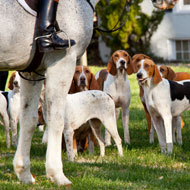
Fox hunting was banned in England and Wales in 2004 but trail hunting remains legal.
Protests were held outside 20 National Trust properties on Sunday (25 February), amid allegations that illegal fox hunts are being carried out on the trust’s land under the guise of ‘trail hunting’.
The protests were organised by lobby group National Dis-Trust, supported by the League Against Cruel Sports (LACS). Campaigners accuse the National Trust of reneging on changes made to the way it licenses trail hunts on its land, which aimed to better safeguard conservation.
Fox hunting was banned in England and Wales in 2004 but trail hunting remains legal and allows hunts to pursue a scent, rather than a live fox, along a pre-determined route. However, many campaigners fear that trail hunting is being used as a ‘cover’ for illegal hunts.
The National Trust says it licences trail hunts in some areas and at certain times of year, where this is compatible with its aims of public access and conservation. A campaign to ban the practice on the trust’s land was narrowly defeated at its autumn AGM.
Changes to licensing terms
A number of changes were made to the way trail hunts are licensed, including: a ban on the use of animal-based scents; a ban on the presence of terrier men; more active management of hunts and how they operate; probing the track record of each applicant; and a pledge to publish dates and locations of hunts on its website. The trust also said it would work more closely with the police’s National Wildlife Crime Unit.
However, LACS claims the trust is reneging on these promises by not checking if licensed hunts have retrained their hounds to ensure they do not follow animal-based scents. It also says terrier men have been seen accompanying licensed hunts.
Additionally, the trust has decided not to publish specific routes, or start and end points, of hunts, owing to concerns about public safety and the potential for disorder. It will publish the area over which the hunt is licensed to take place and dates on which it will occur. In a policy statement, the trust said: ‘…We do not want to encourage or create a climate of confrontation between trail hunt followers or protestors’.
Unlicensed hunts
LACS also alleges that, since the AGM in autumn, 17 hunts have been seen trespassing on National Trust land without a licence. The Warwickshire Hunt was recently granted a licence to trail hunt on National Trust land, despite claims that the hunt has been filmed with terrier men and was seen trespassing at Farnborough Hall in November. Recent footage from hunt saboteurs also showed hounds from the same hunt in pursuit of a fox.
National Trust says it takes reports of unlicensed trail hunts on its land very seriously and seeks urgent clarification from the hunts involved. In previous years, it says it has suspended, revoked or declined to issue licences when conditions have been broken or where it has lost confidence in the hunt’s ability to adhere to conditions.
Responding to the recent protests, the trust said: ‘We have been carefully listening to both sides of a highly polarised and passionate debate around trail-hunting for years.
‘People have the legal right to organise demonstrations and express their views. We accept these protests on our land, provided they are respectful and do not interfere with conservation or access for our visitors.’


 BVA has announced a new series of its Building Great Workplaces lunchtime webinars.



