


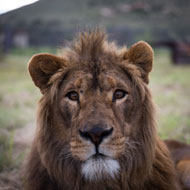
Simba and Saeed transferred to South African sanctuary
A pair of young lions rescued from war-torn cities in the Middle East have been relocated to a sanctuary in South Africa.
International charity FOUR PAWS organised the rescue of Simba and Saeed from zoos in Mosul and Aleppo last year, where they faced bombs, starvation and disease.
Since then, the pair have undergone months of intensive care and rehabilitation at a wildlife rescue centre in Jordan - the Al Ma’wa for Nature and Wildlife.
This week they were relocated to LIONSROCK in South Africa, after a 33-hour transfer by passenger planes and trucks. They can now live out the rest of their days at the 1,250-hectare sanctuary for big cats, where FOUR PAWS says it plans to socialise them with other rescued lions.
Simba, who is believed to be around four years old, was born at the Montazah Al-Morour Zoo in eastern Mosul. Most of the zoo’s 40 resident animals died of starvation or were killed in bomb attacks during the ongoing war in Iraq, while some escaped from their damaged enclosures. Simba and a bear named Lula were the only animals left alive.
After weeks of difficult negotiations in Iraq, the charity managed to evacuate both animals and transport them to Jordan.
Meanwhile, two-year-old lion Saeed is thought to have been born in captivity during the war in Syria. Along with 12 other animals, he was rescued from the Magic World amusement park near Aleppo in July last year. After a two-week stay in Turkey, the government approved the departure of all 13 animals to Jordan in August.
Owing to their young age and good health, FOUR PAWS decided to relocate the lions to the sanctuary in South Africa, where around 100 other rescued big cats already live.
“Simba and Saeed had a difficult start to life,” said the charity’s big cat expert Barbara van Genne. “But thanks to the tireless efforts of the animal caretakers and vets involved, the health of the two lions has improved enormously.
“They are now ready to begin a new chapter at our big cat sanctuary LIONSROCK. There, we have the chance to bring Simba and Saeed together with other rescued lions. As young big cats feel comfortable in prides we will immediately begin our socialisation project for both lions.”
Image © FOUR PAWS/Daniel Born


 BVA has announced a new series of its Building Great Workplaces lunchtime webinars.



