
Your data on MRCVSonline
The nature of the services provided by Vision Media means that we might obtain certain information about you.
Please read our Data Protection and Privacy Policy for details.

In addition, (with your consent) some parts of our website may store a 'cookie' in your browser for the purposes of
functionality or performance monitoring.
Click here to manage your settings.
If you would like to forward this story on to a friend, simply fill in the form below and click send.

Your friend's email:
Your email:
Your name:
 
 
Send Cancel

Conservationists voice concern over Sea Life deaths
The MCS has collaborated with Sea Life on various conservation projects.

Marine Conservation Society reviewing partnership with aquarium

Conservationists have voiced concern after a BBC investigation found that a total of 4,500 marine animals died at eight Sea Life centres in England in a single year (2015-2016).

The Marine Conservation Society (MCS) said that the findings are a 'cause for concern’ and that ‘discrepancies between individual centres need to be explained’.

According to the BBC, the deaths occurred at centres In Birmingham, Blackpool, Great Yarmouth, Hunstanton, London, Manchester, Scarborough and Weymouth. In Great Yarmouth, there were 812 deaths out of a total of 2,293, equating to around one in every three animals.

MCS Ocean Ambassador Dr Ben Garrod told the BBC: “You wouldn’t go into hospital and expect a one-in-three chance of dying. You wouldn’t expect that in a zoo. I don’t think it is acceptable.”

Sea Life owner Merlin Entertainments told the BBC that different aquariums couldn’t be compared “like for like” because of the diverse range of animals. It explained that some of the losses at its Great Yarmouth Centre were the result of a “technically complex” water issue.

“The response we’ve seen from Sealife reassures us to some degree. In particular, the incidents of high mortality appear to be the result of unforeseen problems which the chain has taken steps to rectify,” said MCS head of programmes Dr Chris Tuckett.

“There are still questions over the keeping of some animals including endangered species and we would like to see a more robust set of record-keeping maintained by public aquariums to demonstrate that they give the specimens in their tanks care and attention as a matter of routine”.

The MCS has collaborated with Sea Life on various conservation projects and accepted sponsorship to produce its Good Fish Guide. In light of the recent findings, Dr Tuckett said that the MCS will be reviewing its partnership with the aquarium if future collaboration is to be pursued.

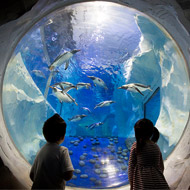
Image (C) Roy Kilcullen Photography/Gp258/Wikimedia Commons

Become a member or log in to add this story to your CPD history

Equine Disease Surveillance report released for Q4 2025

News Story 1
 The latest Equine Disease Surveillance report has been released, with details on equine disease from Q4 of 2025.

The report, produced by Equine Infectious Disease Surveillance, includes advice on rule changes for equine influenza vaccination.

Statistics and maps detail recent outbreaks of equine herpes virus, equine influenza, equine strangles and equine grass sickness. A series of laboratory reports provides data on virology, bacteriology, parasitology and toxicosis.

This issue also features a case study of orthoflavivus-associated neurological disease in a horse in the UK. 

Click here for more...
News Shorts
NSA webinar explores sheep tailing and castration

The National Sheep Association (NSA) is to host a free webinar on the castration and tail docking of lambs.

The webinar, 'Understanding the tailing and castration consultation: A guide for sheep farmers', will be hosted online on Monday, 2 March 2026 at 7.30pm.

It comes during a government consultation into the methods used for these procedures. Farmers are encouraged to engage before the consultation period closes on Monday, 9 March 2026.

The webinar offers clear and actionable guidance to support farmers to contribute meaningfully to the consultation and prepare for potential changes.

On the panel will be former SVS president Kate Hovers, farmer and vet Ann Van Eetvelt and SRUC professor in Animal Health and Veterinary Sciences Cathy Dwyer. Each panel member will utilise their own specialism and expertise to evaluate risks and outcomes to sheep farming.

Find out more about the webinar on the NSA website.


