


Concerns grow as another golden eagle disappears
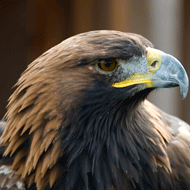
Another tagged golden eagle has disappeared in the Scottish Highlands.
Concerns are growing for a pair of young eagles following reports that another tagged golden eagle has disappeared in the Scottish highlands.
Data from the two-year-old male’s transmitter showed that the bird had been living in the Monadhliath Mountains for around a year. In mid-December, however, his tag inexplicably stopped transmitting.
The RSPB said that an investigation by Police Scotland has not yet shed any light on the disappearance, nor has any further data been received from the tag.
RSPB Scotland’s head of species Duncan Orr-Ewing said: “A report published by the Scottish Government last May, prompted by the regular disappearance of satellite-tagged eagles in this same area, provided unequivocal evidence that the sudden disappearance of these birds is highly suspicious.”
“This is now the twelfth tagged eagle to go missing in this 'black hole' in just seven years and is entirely consistent with the systematic and ongoing illegal persecution of eagles in this area.”
Before the bird fledged from a nest in the Cairngorms National Park, he was paired to a two year-old female, which was also fitted with a transmitter. Data from the female’s tag shows that she left the same area for several days following the male’s disappearance - possibly in search of her missing mate - before returning to the territory.
The female has since been joined by another young male, giving strength to the idea that the two-year-old male has vanished.
Mr Ewing said that, despite warnings from the Scottish government, criminals are intent on killing golden eagles - particularly in areas managed for driven grouse shooting.
“Patience with self-regulation is at an end and meaningful deterrents are now urgently required,” he said. “We support the introduction of new measures to license driven grouse shooting, including powers for the public authorities to remove such licences, where there is good evidence of criminal behaviour”.


 BVA has announced a new series of its Building Great Workplaces lunchtime webinars.



