
Your data on MRCVSonline
The nature of the services provided by Vision Media means that we might obtain certain information about you.
Please read our Data Protection and Privacy Policy for details.

In addition, (with your consent) some parts of our website may store a 'cookie' in your browser for the purposes of
functionality or performance monitoring.
Click here to manage your settings.
If you would like to forward this story on to a friend, simply fill in the form below and click send.

Your friend's email:
Your email:
Your name:
 
 
Send Cancel

New Caudata rules set to come into force in July
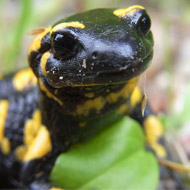
Bsal has been detected in different species of salamander across the UK, both kept as pets and in the wild.
Rules to prevent spread of deadly fungus amongst newts and salamanders

New rules on the import of Caudata amphibians are to be implemented across the UK following a decision by the European Commission.

The new rules come into force on the 1 July, 2018 and seek to prevent the spread of the fungal pathogen Batrachochytrium salamandrivorans (Bsal) amongst newts and salamanders.

According to the European Food Safety Authority, Bsal has been detected in different species of salamander across the UK, both kept as pets and in the wild. Cases have been reported in Germany, Belgium, Spain, the Netherlands and the UK. In some salamander species, Bsal has been shown to cause high mortality.

The Ornamental Aquatic Trade Association (OATA) has urged anyone involved in the import, export or sale of Caudata species to familiarise themselves with the new rules and to ensure any animals they buy and sell conform.

The rules cover the whole of the UK and, to import Caudata or move between EU countries, individuals must:
  • use the custom code 0106900000
  • have the appropriate health certificates
  • pre-notify APHA of non-EU imports (CVED) or FHI for EU imports (BSAL2). They will also need to do this if they wish to export Caudata to the EU or if the import is from outside the EU
  • quarantine animals at a Fish Health Inspectorate (FHI) registered appropriate establishment and get a written authorisation from them for release once the animals have completed the quarantine period.
Pets, defined as five or fewer animals accompanied by their owner, are excluded from the rules. Acquiring animals from a trade show, shop or hobbyist to become part of a collection is not defined as moving a pet.

Further information can be obtained from the Fish Health Inspectorate: fhi@cefas.co.uk

Become a member or log in to add this story to your CPD history

Submissions open for BSAVA Clinical Research Abstracts 2026

News Story 1
 The BSAVA has opened submissions for the BSAVA Clinical Research Abstracts 2026.

It is an opportunity for applicants to present new research on any veterinary subject, such as the preliminary results of a study, discussion of a new technique or a description of an interesting case.

They must be based on high-quality clinical research conducted in industry, practice or academia, and summarised in 250 words.

Applications are welcome from vets, vet nurses, practice managers, and students.

Submissions are open until 6 March 2026. 

Click here for more...
News Shorts
Survey seeks ruminant sector views on antimicrobial stewardship

A new survey is seeking views of people working in the UK ruminant sector on how to tackle the challenge of demonstrating responsible antibiotic stewardship.

Forming part of a wider, collaborative initiative, the results will help identify the types of data available so that challenges with data collection can be better understood and addressed.

Anyone working in the UK farming sector, including vets and farmers,is encouraged to complete the survey, which is available at app.onlinesurveys.jisc.ac.uk


